
Easy Ways to Reinforce Basic Swimming Techniques Between Swim Lessons
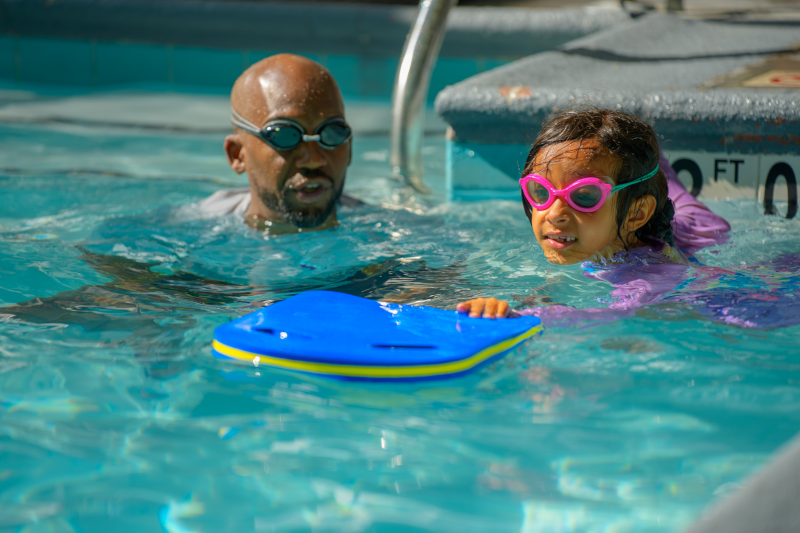
A common question we hear from parents between lessons is some version of “is there anything we can do at home?” It’s a great question, and the answer is yes. With a little bit of guidance on which swimming techniques actually help versus what gets in the way, home practice can make a real difference between lessons.
WeAquatics instructor Laurissa Skinner regularly gives her students take-home activities. “I give my kids homework all the time!” she says.
The key is keeping it simple and connected to what’s already happening in lessons. Home practice works best as reinforcement, not independent instruction. These three activities do exactly that.
1. Blow Bubbles at Bath Time
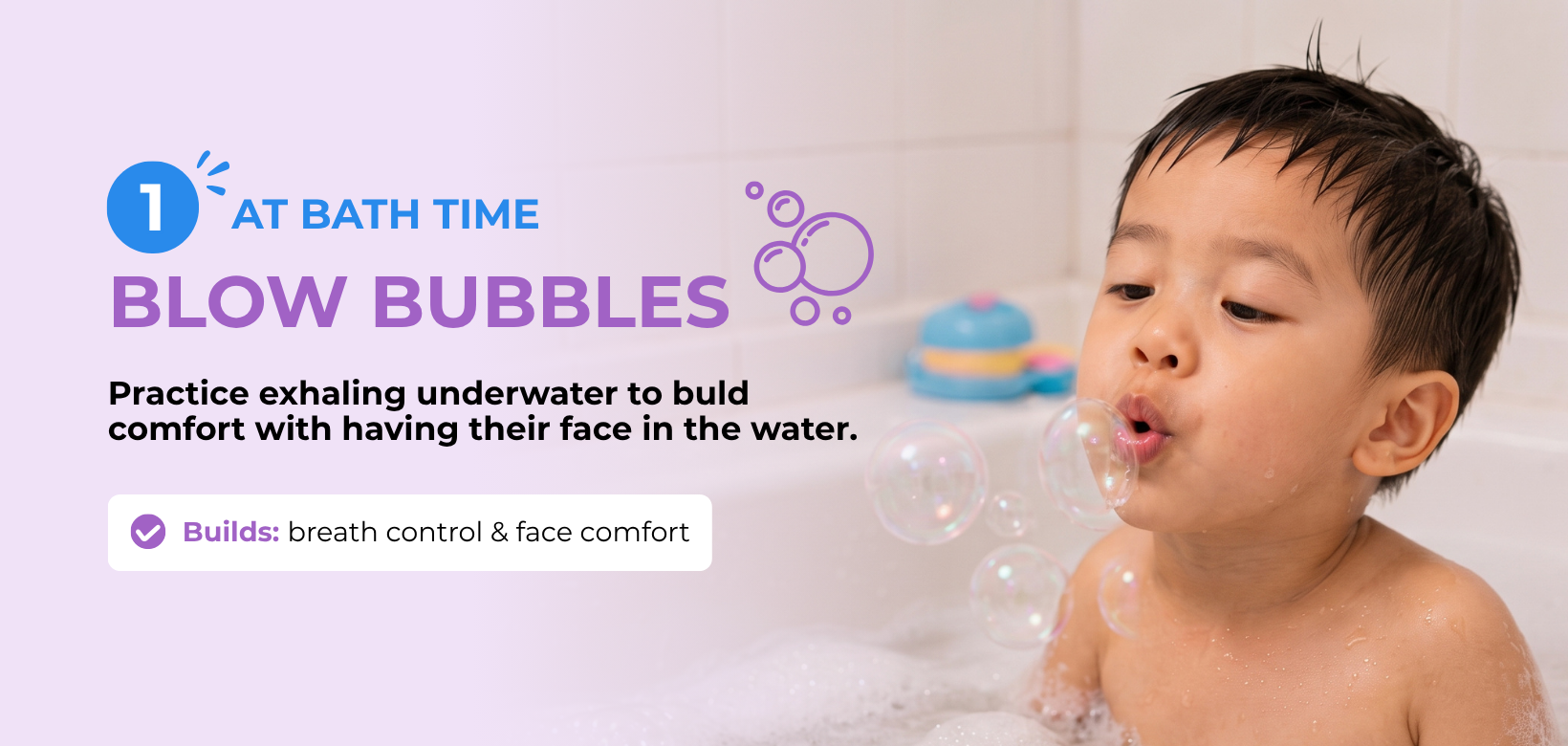
That’s it, no complicated setup and no special equipment. Learning to exhale in the water is one of the most foundational swimming techniques for beginners because it builds comfort with having their faces near or in the water. A child who can relax and breathe out in the water is going to pick up many other skills faster.
If your child’s instructor has already introduced bubble breathing in lessons, bath time is a low-pressure way to keep that familiarity going between sessions. Just make sure they’re supervised around any amount of water, and skip anything that hasn’t already come up in their lessons.
2. Wear Goggles Around the House
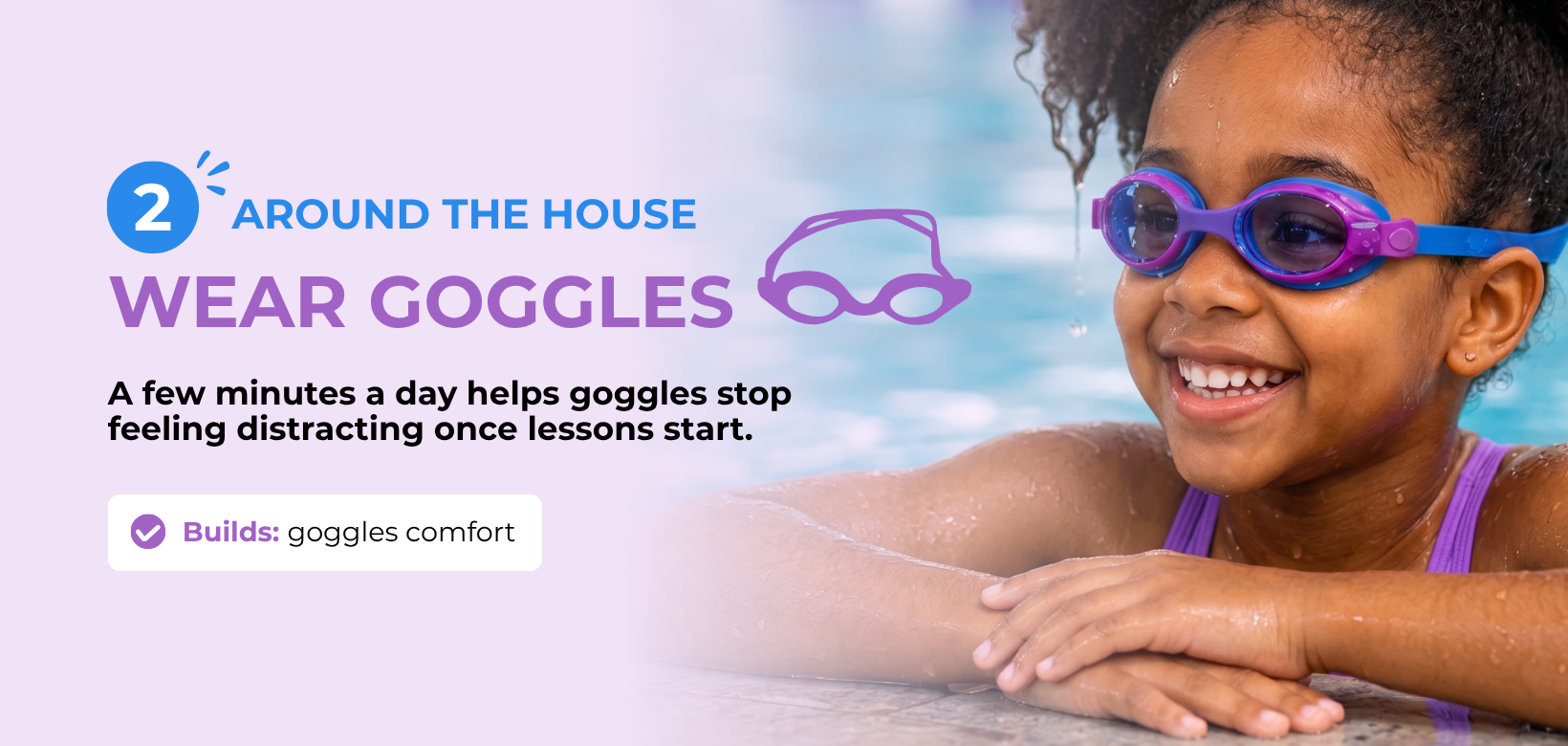
Goggles are one of those things that can take up way more brain space than they should during a lesson. A kid who’s still figuring out whether they fit right or feel weird has that much less attention for whatever the instructor is actually trying to teach them that day.
When Laurissa has a swimmer who’s still getting used to them, she’ll send them home with a simple ask for parents. “Put the goggles on them for two or three minutes a day as they get used to it a little longer,” she says.
That’s genuinely all it takes. Your kid can wear them on the couch, at dinner, walking around the house, whatever. You’re not trying to accomplish anything specific with those two or three minutes, except to get the goggles on their face enough times that it stops being a thing. Most kids get there pretty quickly once it’s happening outside the pressure of a lesson.
Worth mentioning that Laurissa brings this up for specific swimmers who are still in the adjustment phase, not as a general recommendation for everyone. If goggles haven’t come up yet with your child’s instructor, there’s no need to go there on your own. If they have, and your child is still working through it, a few minutes a day at home will do more than you’d expect.
3. Practice Streamline in Front of a Mirror
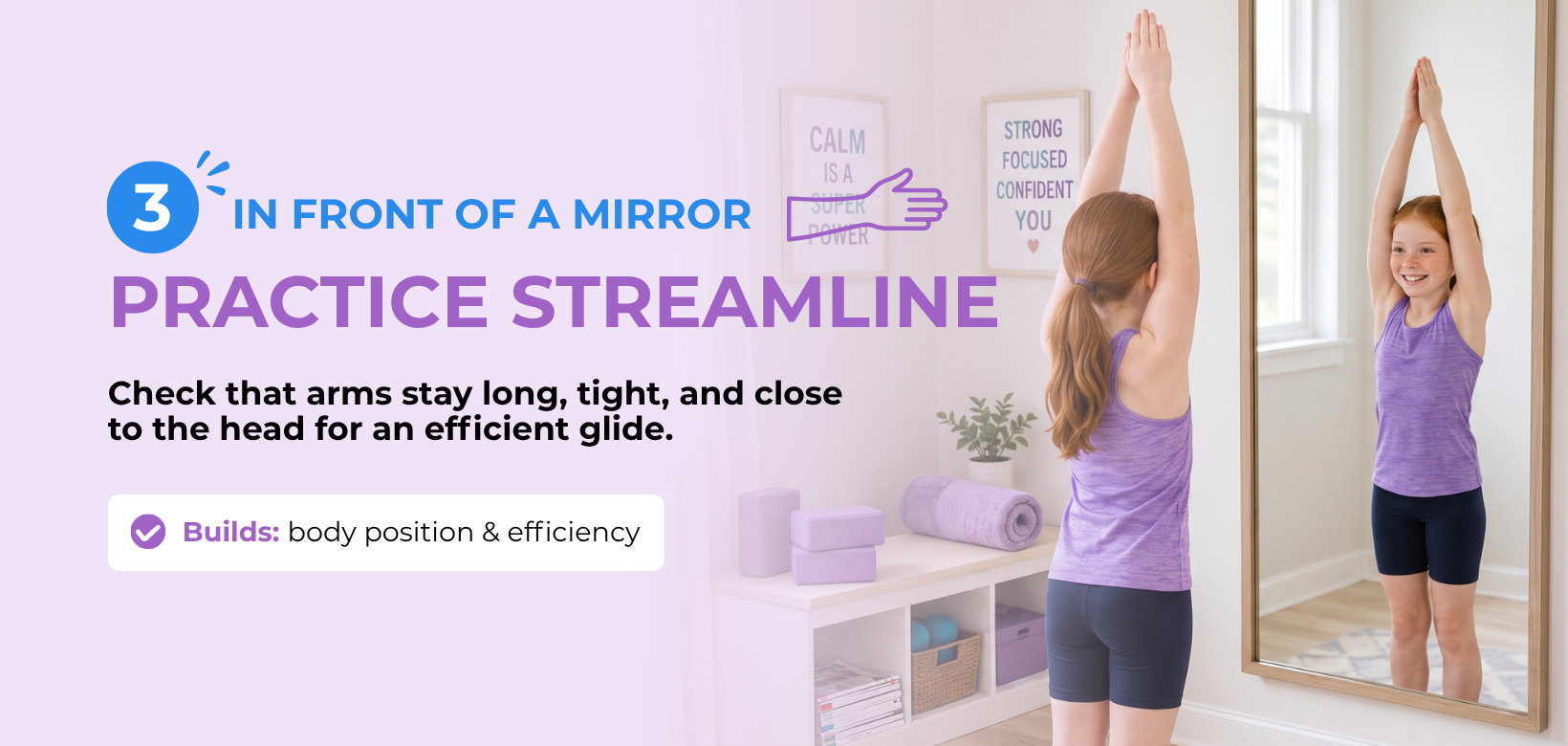
Streamline is the long, tight body position swimmers use off the wall and during underwater glides. It shows up early in lessons and continues to matter as swimmers progress because efficient body position is one of the factors that makes the biggest difference in how much energy a swimmer uses in the water.
Laurissa puts it plainly: “For swimming efficiency and saving energy, the leaner and longer you get, the less energy you’re going to use to swim. It’s all physics!”
Her recommendation for home practice is simple. “Just get them to practice being long and lean at home in front of a mirror, and that will help them be long and lean in the water.” Standing in front of a mirror, a child can check their arm position, see whether their arms are close to their head, and get a feel for what the position looks and feels like outside the pool. That visual feedback is genuinely helpful, especially for kids who are still working on translating what an instructor describes into movements their bodies perform automatically.
Practicing streamline at home is one of the more straightforward forms of swimming training that doesn’t require any water at all.
Research shows that swimming has significant positive effects on the development of fundamental movement skills in kids ages 3 to 11, including balance and motor coordination. Building body awareness through activities like mirror practice supports that same development between lessons.
Why Keeping It Simple Is the Point
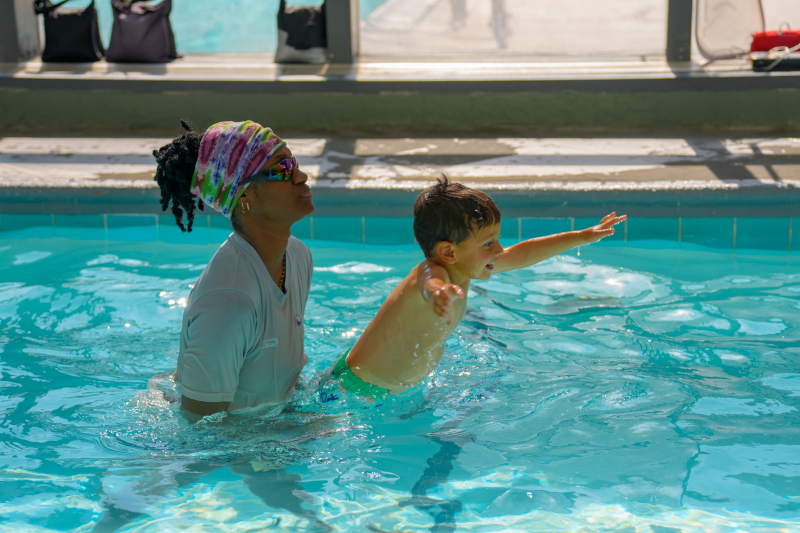
These three activities work because they stay close to what swimmers are already doing in lessons. Bath-time bubble practice, goggle familiarity, and streamlining in the mirror are not meant to replace time in the pool or to teach new swimming techniques independently. They’re meant to keep certain movements and pieces of equipment feeling familiar so that when a swimmer gets back in the water, they pick up where they left off rather than starting over.
A quick recap:
- Bath time: bubble breathing practice
- Around the house: goggle familiarity
- In front of a mirror: streamline body position
A few minutes of the right kind of practice can help certain things click faster when a swimmer returns to their lessons.
Keep Building on What They’re Learning in Lessons
Laurissa’s broader approach to teaching is built on the understanding that kids learn and respond differently. Some swimmers will love repeating a home activity. Others will push back on it. Both are fine. The goal is to support learning, not add pressure to it.
A good question to ask at the end of any lesson: “What can we practice at home this week?” It keeps the instructor, swimmer, and family connected and gives home practice a clear direction each time.
Ready to get your swimmer into lessons? Explore our Learn-to-Swim, Group Swim Classes, and Adaptive Swim Lessons across DC, Maryland, and Virginia and find the right fit for your family.

