
Fear Does Not Disappear in Competitive Swimming
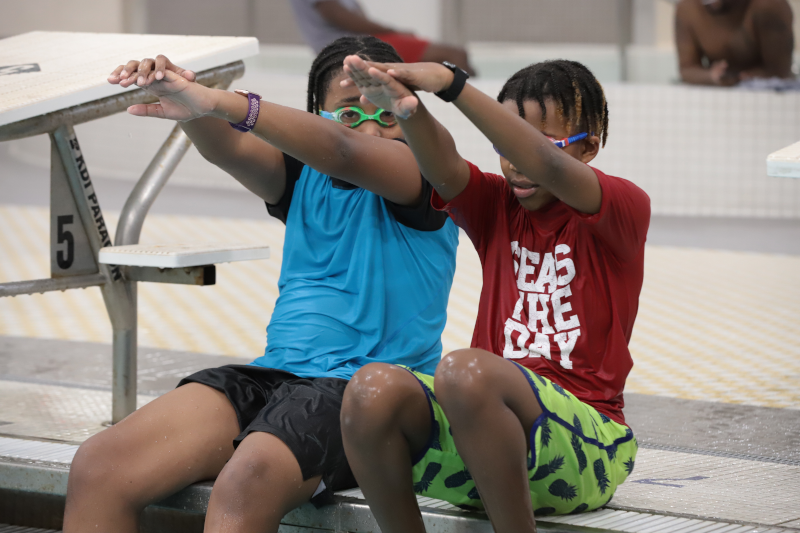
Most families draw a hard line between swimming lessons and competitive swimming, as if one ends and the other begins somewhere far away, but at WeAquatics that line barely exists.
USA Swimming counted roughly 376,000 individual members in 2024, including more than 70,000 new members who joined that year alone, according to the organization’s annual demographics report, and a good number of those swimmers started out in a beginner lesson learning to blow bubbles and float on their back before an instructor noticed something more going on.
Readiness Is Motivation Before It Is Speed
Ask Laurissa Skinner, who has spent 50 years around pools as a WeAquatics instructor, what separates a lesson kid from a swim team kid, and speed isn’t the first thing she brings up.
“The kids that are motivated learn really quickly,” Laurissa says. “From experience, if you can get the kids motivated, they’ll learn pretty quickly. A lot of kids are just thrown into swim lessons because their parents need something to do with them, but they don’t approach it as a sport.
But the kids that approach it as a sport, I’ve pushed several off to club teams in our area, and they’re now doing year-round swim. Those kids that you can get motivated, definitely nurture them, because they’ll do big things.”
She has a current student who fits this exactly. He’s seven years old, started with her at six, and his mom recently mentioned he’s already swimming for his private school’s team. “This kid, no matter what, I could get him to do anything in the water just because he’s focused, he wants to do it, and he has a lot of energy to burn off,” Laurissa says. “We’re still working on breaststroke; breaststroke is hard, but he’s seven, and I can just look at him and say, ‘Hey, let’s swim a 100.’ And he’s like, ‘Okay, that’s down and back, down and back, right?’ Yep. Seven years old, and I get him swimming a 100.”
That kind of drive, more than raw talent, is usually the first sign an instructor picks up on when a swimmer might be ready to move toward competitive swimming.
The Technical Foundation Competitive Swimming Is Built On
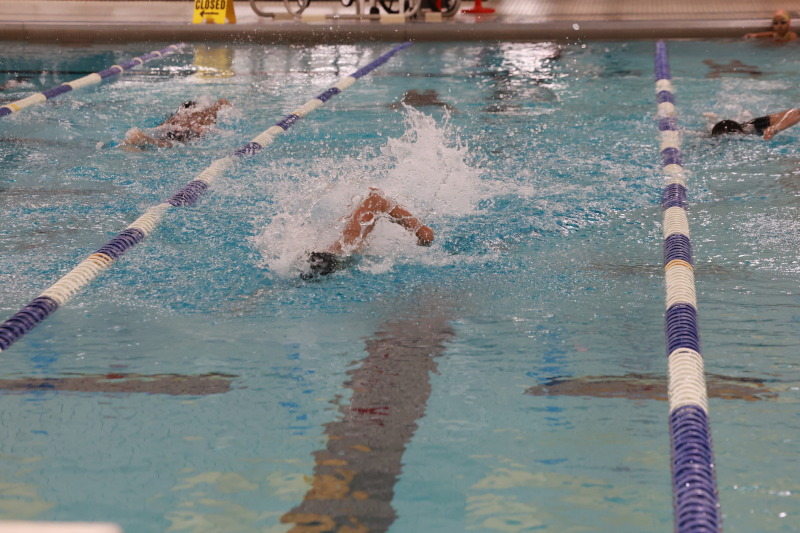
Motivation only carries a swimmer so far without the technical base that swimming lessons are supposed to install first. Club practice assumes kids already know how to push off the wall in a streamlined position, kick with some actual propulsion behind it, and breathe to the side without losing their rhythm entirely. Marcelo Guzman, Assistant Operations Manager at WeAquatics, builds toward that foundation in layers, adding one small piece at a time rather than throwing a swimmer into the deep end of technique all at once.
“What does work, what I always try to start off with, is drill progressions,” Marcelo explains. “Even if it’s a seasoned swimmer or not, we start from a basic drill such as pushing off the wall with their head under, no kicks, then doing the same thing, maybe then adding kicks. Doing the same thing, adding kicks, then our arms. Doing the same thing, adding kicks, arms, and then starting our side breathing.”
He’s also blunt about what actually locks a skill in. “Repetition, repetition, repetition. I can’t stress how much just doing a drill one time does not help. Doing it 8, 10 times, then it’s going to be really, really, really good.”
That kind of layered, repeated practice lines up with what researchers have found when they’ve studied swimming’s role in early motor development. A study examined swimming’s effect on fundamental movement skills in kids aged 3 to 11 and found consistent improvements associated with regular swimming practice, on top of the lifesaving value that already sets swimming apart from most other youth sports. The skills built in those early lessons, in other words, aren’t just there to check a box before club tryouts. They’re doing real developmental work.
Measure Progress, Not Podiums
Even as a swimmer’s technique starts to look more advanced, the day-to-day coaching philosophy usually stays pretty modest. Derrick Linzy, a senior learn-to-swim instructor and a Swim Angelfish Level 1-certified coach, keeps his expectations deliberately small.
“The point isn’t to get a perfect score, it’s to get a high score,” Derrick says. “We’re just looking for a little bit of progress, even if it’s one percent.”
He credits that mindset with keeping kids engaged rather than overwhelmed as demands increase. “The best way that I’ve learned to combat that is to just break everything down into easy, actionable steps instead of trying to give them the whole process. Giving them just a piece of it, because we thrive on accomplishments. Even small accomplishments make us feel good and give us kind of the want to push.”
Fear Does Not Disappear at the Competitive Level
It’s easy to assume fear disappears once a swimmer reaches the club-team level. Annette Pinkston, a WeAquatics instructor and Swim Angelfish Level 4 trainer, sees it differently. In her experience, nerves can show up at any stage, from a first lesson to a racing start or meet-day warmup. What matters is giving swimmers the tools to work through that fear without letting it define what they can do.
“I look for the fear first,” Annette says. “That’s the first thing I do. I look for the fear, and I’ll test it to see where it’s going to pop up at.”
She’s watched fear shut kids down at every level, and her method for working through it hasn’t changed as her students have gotten more advanced. “One of the things that happens with people, especially around fear, it just shuts you down in a way in which you’re paralyzed, and you forget everything. So I try and teach from a muscle memory point of view. So we’re going to do this over and over and over and over and over until you’re no longer afraid.”
What Home Practice Looks Like Once Swimming Gets Serious
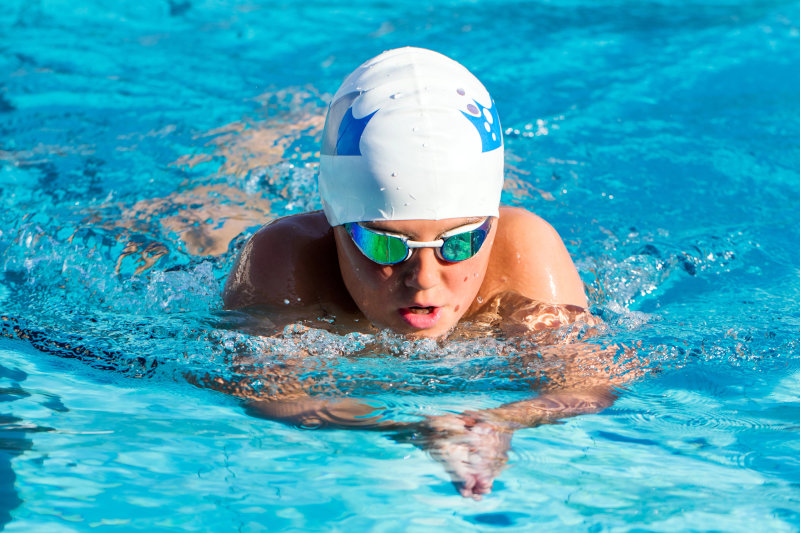
Once a swimmer starts training more seriously, parents often ask what they can be doing between practices to help. Nadjia Rahimi, a WeAquatics instructor, has a specific answer that doesn’t require a pool at all.
“I do encourage breaststroke kicks, and I do tell them it takes only five minutes before bedtime to do some leg exercises while you’re lying down on the mattress,” Nadjia says. “I do tell them that they should just kind of lie sideways and have their legs outside of the bed, but their upper body on top of the mattress, and then I’m like, ‘Okay, remember breaststroke kicks: knees up, legs open, close.'”
She applies the same kind of attention to freestyle. “They need to kind of practice pointy toes when they’re doing freestyle kicks, because a lot of them like to just have some kind of kicks that do not move them around in the water, and it’s a little bit challenging.”
Dry-land work can reinforce the skills swimmers practice during lessons, but it should never replace supervised time in the water. The instructors quoted here make that distinction clear: use these exercises to support in-pool learning, not substitute for it.
Where the Jump Actually Starts
A swimmer might end up racing for a club team someday, or they might just grow into a strong, confident swimmer who never competes a day in their life, and either way the path runs through the same starting point of motivation, technical fundamentals, small wins, working through fear, and the practice that happens outside the pool just as much as inside it.
If your swimmer has been showing the kind of spark Laurissa looks for in her students, it’s worth exploring what comes next.
Learn more about Learn-to-Swim classes at WeAquatics, and when you’re curious about what year-round competitive swimming actually looks like day-to-day, take a look at the Narwhals Swim Team. If you’re still working through the basics of water safety at home, our post on why knowing how to swim doesn’t mean your child is water-safe is a good place to start.

