
Simple At-Home Practice That Can Support a Drowning Rescue
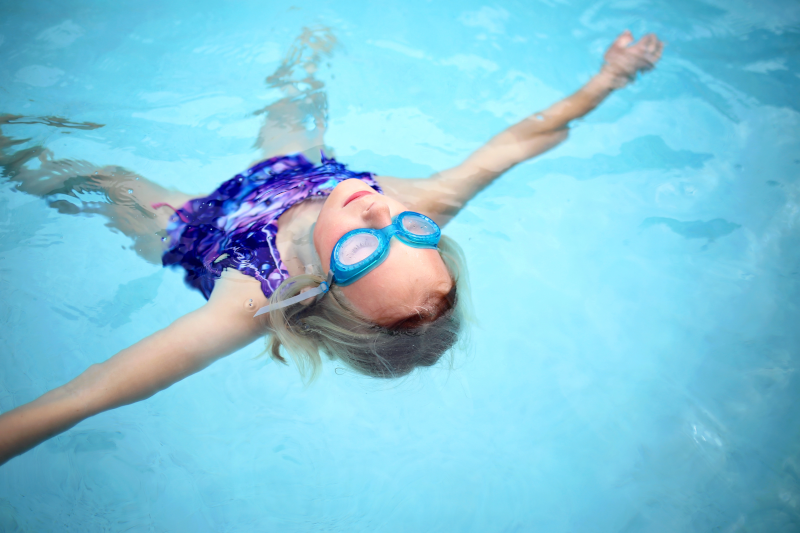
Most water safety conversations focus on how to save a drowning person once something has already gone wrong, and that half of the equation matters.
But there’s a piece that comes before any of that, one we spend most of our time on at WeAquatics: teaching a child to float, turn, and wait long enough that a rescue is even possible in the first place.
A drowning rescue only works if there’s a window of time to work with, and that window gets built in the pool long before anyone’s ever in danger.
Panic Is the Real Emergency
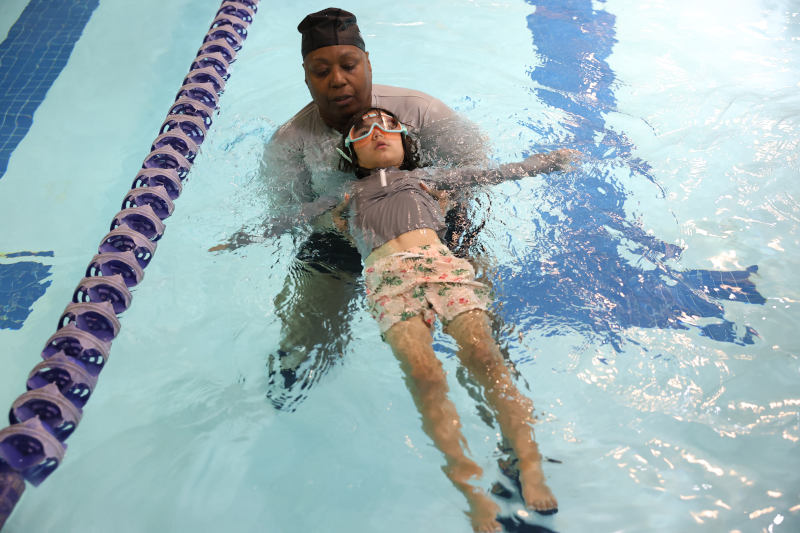
Annette Pinkston, one of our instructors, starts every new student the same way, and it has nothing to do with strokes.
“I look for the fear first,” she says. “That’s the first thing I do. I look for the fear, and I’ll test it to see where it’s going to pop up at.”
She’s watched fear do the same thing to almost every student she’s taught, no matter their age.
“One of the things that happens with people, especially around fear, it just shuts you down in a way in which you’re paralyzed and you forget everything,” Annette explains. “So I try and teach from a muscle memory point of view. So we’re going to do this over and over and over and over and over until you’re no longer afraid.”
With one returning student who was suddenly terrified to jump into the pool she’d swum in years before, Annette didn’t back off or negotiate. She had the student jump again and again, holding her hand the entire time, until the girl finally asked how many more times they’d have to do this.
“Stop asking me,” Annette told her. “I’m looking to see when you stop being afraid. When you stop being afraid, that’s when we’ll stop.”
That persistence is the whole point. A panicked child can’t think through a self-rescue sequence, no matter how many times they’ve practiced it on a calm day, so working through the fear itself has to come first.
Self-Rescue Skills That Buy Critical Time
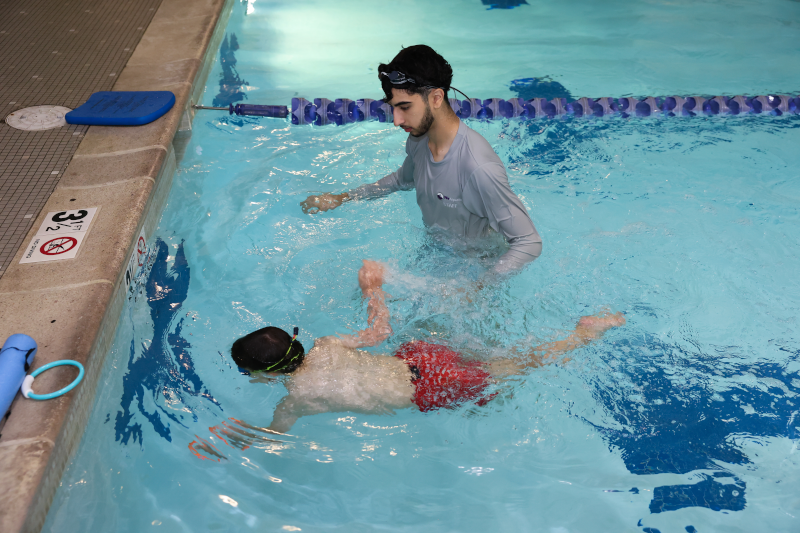
Once fear stops running the show, the actual skills start to matter, and they’re more specific than most parents assume.
The American Academy of Pediatrics describes water competency as a combination of three things:
- Swim skills
- Water safety knowledge
- The ability to recognize a dangerous situation
That combination is exactly what we build toward with every student: rolling onto the back to float, controlling breath, treading, and swimming to the nearest exit.
Marcelo Guzman, one of our learn-to-swim instructors, builds those skills the same deliberate way every time.
“What does work, what I always try to start off with, is drill progressions,” he says. “We start from a basic drill such as pushing off the wall with their head under, no kicks, then doing the same thing, maybe then adding kicks. Doing the same thing, adding kicks, then our arms. Doing the same thing, adding kicks, arms, and then starting our side breathing.”
He never skips the demonstration step either, even with students who’ve been swimming for a while.
“Every single time that I’m explaining a new drill or we’re starting something new, I always demonstrate it, show it to them, and we physically do it.”
And he’s blunt about what it takes for any of it to stick.
“Repetition. Repetition, repetition, repetition. I can’t stress how much just doing a drill one time does not help. Doing it 8, 10 times, then it’s going to be really, really, really, really good.”
Skills like these are what actually give a drowning rescue a chance to work, because a rescuer needs a few seconds of a floating, breathing child rather than a fully submerged one.
Practice at Home That Supports a Real Drowning Rescue
Parents often ask what they can do between lessons, and Nadjia Rahimi, another of our instructors, has some simple answers that don’t require a pool at all.
“I do encourage breaststroke kicks and I do tell them it takes only five minutes before bedtime to do some leg exercises while you’re laying down on the mattress,” she says. “I do tell them that they should just kind of lay sideways and have their legs outside of the bed, but their upper body on top of the mattress, and then I’m like, ‘Okay, remember breaststroke kicks: knees up, legs open, close.'”
Even bath time works.
“I do encourage practice. I do say that if your kid learns something, especially like blowing bubbles in the water, there’s exercises they can do at home. For instance, filling up the bathtub or during bath time they can do a little bit of blowing bubbles, especially beginners.”
Marcelo adds one more layer to how any of this should be framed at home.
“The student can feel like they did a great job instead of them always feeling bad about themselves.”
A quick note on home practice:
- It reinforces what’s already been taught in lessons
- It works best as encouragement, not correction
- It never replaces supervised instruction in the water
What Parents Should Learn Alongside Their Kids
Kids aren’t the only ones who need a plan. If you’re ever in a position where you need to know how to save someone from drowning, the sequence matters more than instinct does, according to guidance from the American Red Cross:
- Shout for help
- Call 911
- Reach or throw a flotation device rather than swimming out yourself
- Start CPR the moment the person is out of the water
Going in after someone is almost never the safest option, even for strong swimmers, which is exactly why teaching a child to self-rescue matters so much in the first place.
That gap in adult preparedness is bigger than most people realize. According to the CDC, over half of U.S. adults have never taken a swimming lesson, and roughly 40 million adults nationwide don’t know how to swim at all. A lot of those adults are parents standing poolside, hoping nothing ever happens, without a real plan for what they’d do if it did.
Annette sees this hesitation constantly, and she’s built her whole approach around meeting it head-on.
“Somebody who has the desire to learn how to swim, but they’re afraid,” she says, describing who she most wants to work with. “It’s like they always wanted to do it, but they want to feel safe. They want to feel in a safe environment, non-judgmental. It’s those people. Those are the ones that I really want, because it’ll be bigger than just in the pool. It’ll expand their life once they can negotiate their fears.”
Building the Time a Rescue Needs
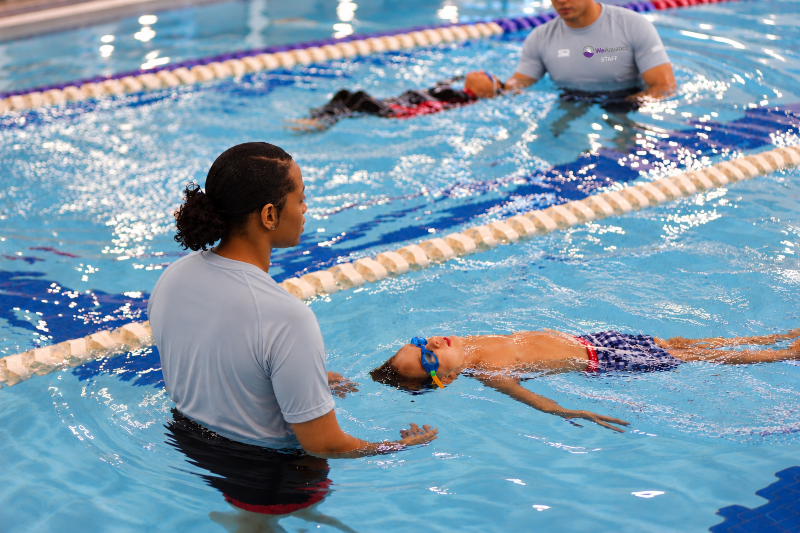
Knowing how to save a drowning person is only useful if there’s someone in the water who can hold on for a few extra seconds while help arrives. That’s what we’re actually building in every lesson: the float, the breath control, the ability to stay calm long enough to be rescued.
If your child hasn’t started that work yet, or if you’re an adult who’s been putting off learning yourself, we’d love to help.
>
Explore our Learn to Swim program, Adaptive Swim for individuals who need a different pace or approach, and our Adult Masters program for parents ready to close that gap for themselves too.

