
Questions to Ask Before You Enroll in Small Group Swim Lessons for Kids
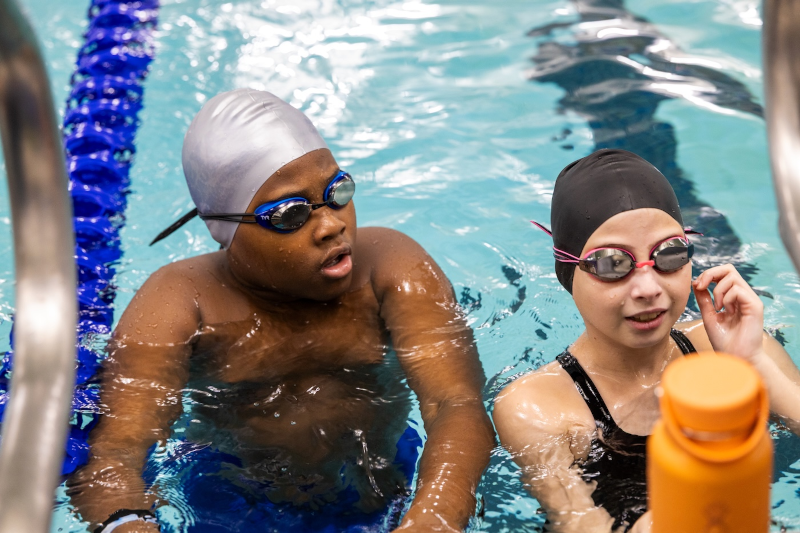
Plenty of parents like the idea of their child learning alongside other swimmers, and then one question comes up right away: will someone notice when my child needs help, or will they spend most of the lesson waiting for a turn?
With small group swim lessons for kids, the honest answer depends on the class, the instructor, and the child. Our small group swim lessons at WeAquatics run four to six students per group, which gives you a starting point, and the rest of this post covers what to look for and what to ask before you enroll.
What Does Individual Attention Look Like in a Group?
Look for Useful Feedback, Not Just Time Beside the Instructor
Attention in small group swim lessons for kids is easier to judge by what your child gets from it than by how long an instructor stands nearby. Useful feedback is specific, gives the swimmer one clear thing to work on, and leaves room to try again right away.
Imagine a swimmer whose hips keep sinking during kicking: the instructor suggests pointing the toes and kicking from the hips, and the swimmer heads back to the wall for another attempt. A good question for any instructor is, “How will I know what my child is working on and what their next step is?”
Derrick Linzy, one of our instructors, describes building confidence in manageable steps when swimmers are working through fear:
“I just try to make things as easy as possible to build that confidence so that once we move on and we pull it all together, it all just flows naturally.”
Ask About Participation and Supervision
The American Academy of Pediatrics suggests considering whether children spend most of a class swimming instead of waiting, whether they get individual attention, and whether they receive ongoing feedback. In practice, that means asking how practice and turns are organized and who supervises the group while an instructor helps one swimmer.
Small Classes Matter, but the Right Level Matters Too
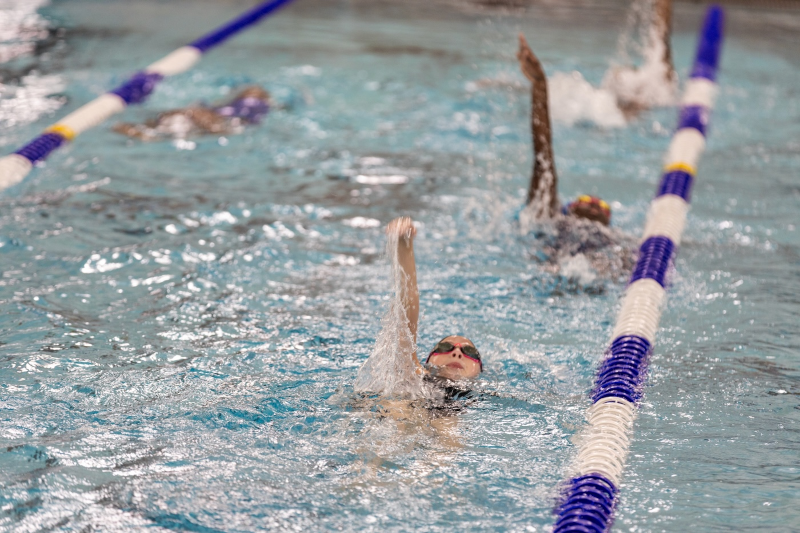
Look Beyond Headcount in Small Group Swim Lessons for Kids
Our group program lists four to six students per group and 30-minute core classes. Those numbers are useful conversation starters, though they do not tell you how many individual teaching minutes each swimmer receives, and the program page does not list staffing, so ask how many instructors teach each class. Small group swim lessons for kids work best when the class level also fits the child, which is why headcount is only part of the picture.
Ask How Your Child’s Class Is Selected
Our coaches take the time to understand each child’s skills, comfort level, and goals, then tailor instruction and recommend the level that fits them best.
Placement matters because a child still getting comfortable putting their face in the water needs a different learning focus than a child refining side breathing. Tell the team about your child’s comfort level, previous lessons, and any support needs instead of choosing by age or because a friend signed up.
Instructor Nadjia Rahimi names different rates of learning as a real challenge in group teaching:
“You’re trying to teach one stroke. Now, one is getting it, the other one is kind of getting it, the third one is very good at it, and it’s like, now we’re going to have to make sure everyone is on the same standard for that class.”
This is a good reason to ask how the instructors handle swimmers at different points during the class.
What If My Child Learns Faster or Needs More Time?
In small group swim lessons for kids, learning speeds vary, and neither a quick learner nor a child who needs more time is holding a class back.
The American Red Cross describes its children’s lessons as tailored to individual needs and paced around skill development, which shows what individualized progression can look like.
If one of our coaches recommends a different level, the coach talks it over with your family and our administration team follows up by phone or email. Ask which skill your child is working toward and what would show they are ready for another level.
For more on how kids experience progress in a group, read how group lessons help kids handle wins and losses.
Questions to Ask Before Enrolling in a Group Class
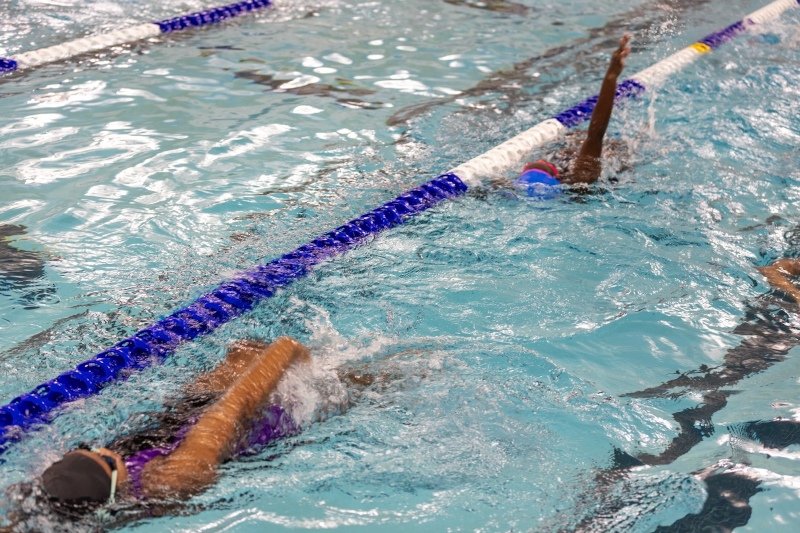
When Nadjia Rahimi describes how she gets to know new students and parents, she explains her goal:
“Just to try to build a relationship so we can work together.”
Bring that same spirit to your enrollment conversation with these questions:
- Class size: How many swimmers will be in the class, and how many instructors?
- Placement: How do you decide which level fits my child?
- Practice: How are activities and turns organized?
- Supervision: Who supervises the group while an instructor helps one swimmer?
- Feedback: How will I learn what my child is working on?
- Comfort: What should I share if my child is hesitant or easily overwhelmed?
- Progression: What happens if the level becomes too easy or too difficult?
- Observation: Is there an approved way to observe a class first?
The AAP also recommends investigating lesson options and observing instruction to judge participation and attention, so ask about our observation policy rather than assuming one.
When Might Private Lessons Be a Better Fit?
Choosing small group swim lessons for kids does not mean private instruction is a lesser option. Some families want fully individualized pacing, some children find a group setting overwhelming, and some have learning or support needs worth discussing with our team, although a shy child or a child with a disability can certainly learn in a group too.
Our one-on-one Learn-to-Swim lessons offer individualized feedback and pacing for families who want that. The most useful question is which setting helps your child participate and get the support they need.
Common Questions About Attention in Group Swim Lessons
- Q: Does My Child Need to Know How to Swim Before Joining?
A: No, we offer beginner group classes. Ask the team about placement so your child lands in a class that fits. - Q: Will My Child Move Up With the Whole Group?
A: Not automatically, since level changes are handled individually. Ask how progress is assessed in your child’s class. - Q: What Should I Do if My Child Says They Did Not Get Help?
A: Start by asking your child what happened, then contact the instructor or program team to talk through the learning task, where your child got stuck, and what support might help. One account of a lesson rarely tells the whole story, and the concern deserves a real conversation.
Find a Group Swim Class That Fits Your Child
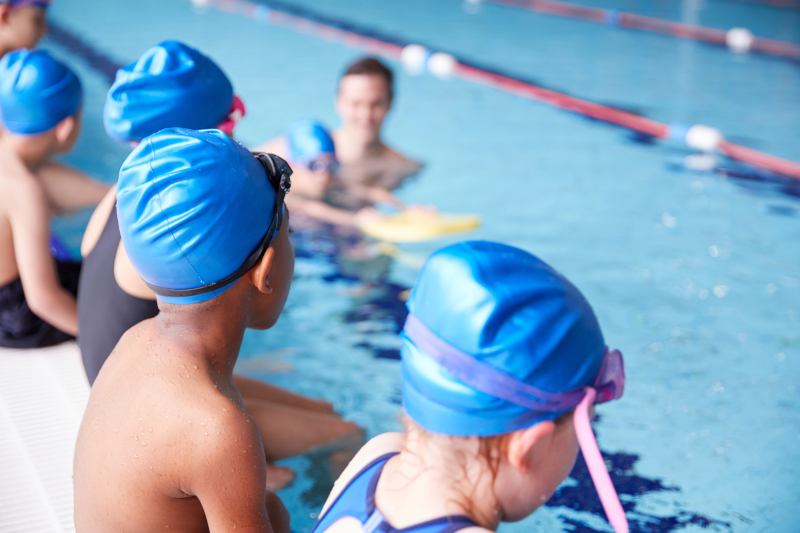
Good small group swim lessons for kids come down to appropriate placement, useful feedback, and clear communication. We offer group classes in Arlington, Brambleton, Olney, and Rockville, and levels, schedules, and openings vary, so ask about current availability for your child’s age and skill level.
You can also explore WeAquatics swim programs to see the full range. Tell our team about your swimmer’s age, current skills, comfort in the water, and any support needs you want to discuss.

