
What to Look for in a Quality ISR Lessons Program
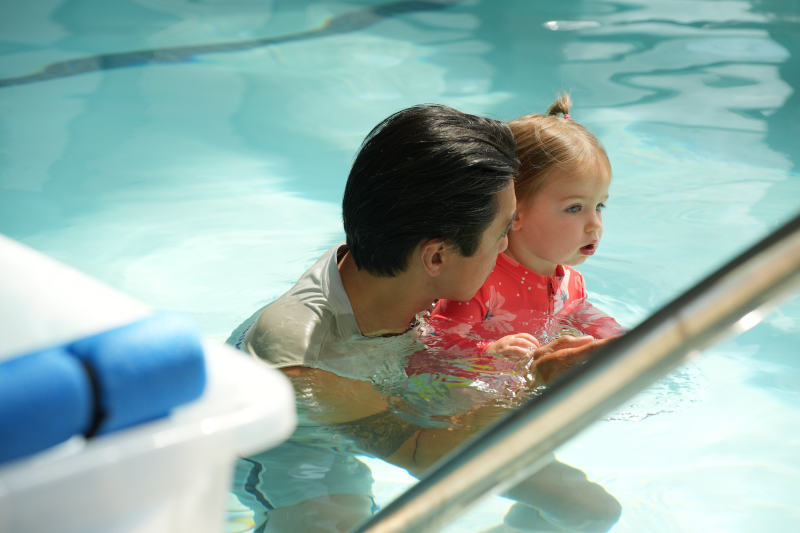
Many parents begin looking into infant survival swim lessons after learning about it from a friend or pediatrician, or because they have concerns about water safety. But they may not know exactly what to ask to ensure they receive the best information.
Infant Swimming Resource™ (ISR) is the name most people recognize, and it’s a specific, research-based program focused on water survival rather than a mommy-and-me class or a typical swim lesson where kids learn to doggy-paddle and splash around.
What follows are seven questions worth bringing to that first conversation. They’re not a replacement for sitting down with our team once we actually know your child, but they’ll help you walk into that conversation with the right things on your mind.
What Should You Ask Before Choosing Infant Survival Swim Lessons?
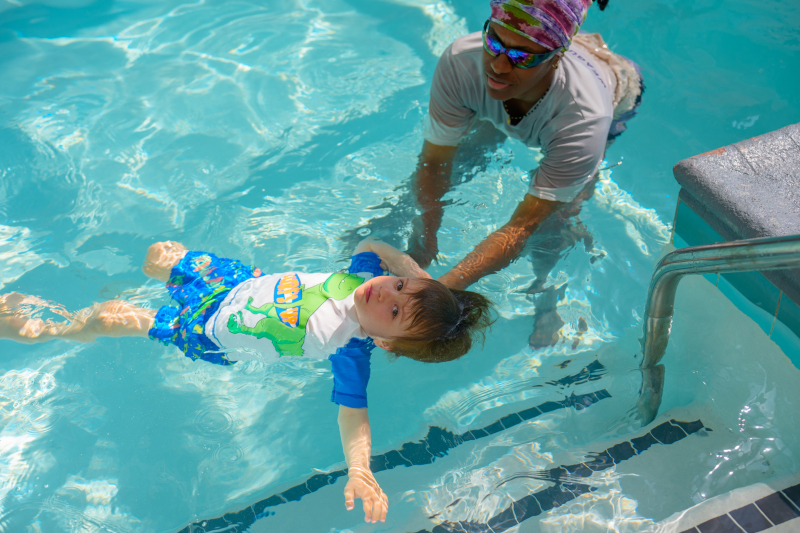
1.How Can I Verify the Instructor’s ISR Certification?
Ask whether the instructor currently holds ISR certification and how much time they’ve spent teaching infant survival swim lessons to children around your child’s age.
Certification isn’t something an instructor gets once and then coasts on for years. It requires ongoing training, and whoever ends up in the water with your child should be able to tell you, without hesitation, how that training shapes the way they’d work with a six-month-old versus a three-year-old, because those two lessons look almost nothing alike.
If you’re curious what that certification process actually involves, we’ve written more about how ISR instruction works and what instructors go through before they’re allowed to teach.
2. How Will You Assess My Child’s Readiness?
It’s worth asking directly what the screening process looks like before a child starts, including what health information gets collected and who you can talk to about developmental readiness if you’re on the fence.
Infant survival swim lessons at WeAquatics are open to kids between six months and four years old, but that range describes who’s eligible for the program, not a promise that every six-month-old walking through the door is ready to start that same week.
The American Academy of Pediatrics recommends talking with your pediatrician before enrolling an infant in any formal program. That conversation is worth having no matter which swim school you choose, and honestly, we’d rather field a tough question from you now than have you second-guess the decision later.
3. What Skills Are Appropriate for My Child?
Ask the instructor to spell out what your child will actually be working on, what progress tends to look like over the first couple of weeks, and how that might shift as your child grows. ISR doesn’t run every student through the same script. The lessons adjust based on a child’s developmental level.
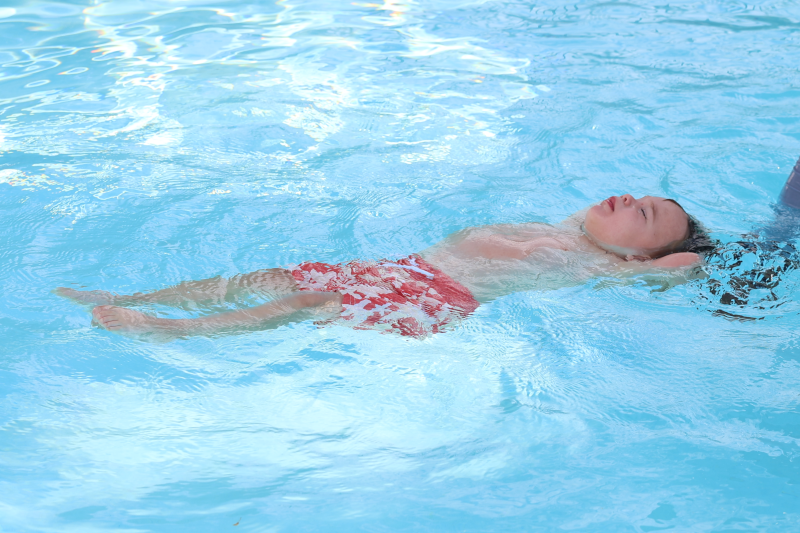
Students as young as six months begin with rollback to float, which teaches them to roll onto their backs and rest there, breathing, until someone can get to them. That skill matters just as much for a baby who isn’t walking yet as it does for an older student who’s already layering in more advanced swimming.
As kids get stronger and more coordinated, they move into swim float swim, where they swim a short stretch, roll onto their backs to catch a breath, then flip back over and keep going until they reach the steps, the pool’s edge, or the shoreline. ISR has more on how these skills fit into a family’s broader approach to water safety, if you want to dig into the reasoning behind the infant survival swim lessons method.
One mom described it this way after her two kids finished a round of lessons:
“Our son is calm and happy in the water and has shown so much improvement and growth. Our daughter loves going to lessons and has become such a strong swimmer! It’s amazing that they both went from not putting their heads under water to swimming unassisted under water!”
4. Does the Program Adapt for Different Learning Needs?
Kids don’t all learn at the same pace, and a program should be upfront about how it handles that rather than leaving you to figure it out mid-lesson.
We have Swim Angelfish® instructors specially certified to work with children with diverse learning needs. If your family has questions about autism, sensory sensitivities, or anything else that might affect how your child responds in the water, bring them up before registering for a class so we can address all your child’s needs.
5. How Will You Keep Me Informed About Progress?
Ask what updates will actually look like once infant survival swim lessons are underway, whether you’ll get to watch, and how the instructor plans to walk you through what comes next as your child improves.
One question that tends to get a useful answer: “What should I be looking for as my child progresses, and how will you let me know when they’re ready for the next step?”
Nobody can promise you an exact timeline before they’ve even met your child, so treat this less like a guarantee and more like a gauge for how communicative a program actually is.
6. What Schedule and Commitment Should Our Family Plan For?
Ask how many days a week lessons run, what time slots are open, roughly how long the course takes, and what happens if your child gets sick or you need to skip a day. Our lessons are one-on-one, ten minutes each, and most kids finish the course somewhere between one and two months in, assuming they show up consistently.
Skip too many days, and the timeline stretches, so it’s worth knowing up front how much wiggle room a program actually gives you.
If the idea of daily lessons sounds hard to squeeze into an already packed week, we’ve written a whole piece on fitting infant survival swim lessons into your routine, including how other families work it around naps and daycare pickup.
7. What Happens After the Initial Lessons?
Ask how the instructor decides what comes next once your child wraps up the initial course, and when a maintenance or refresher infant survival swim lesson might make sense.
Kids grow fast, and their bodies change enough over a few months that skills sometimes need a tune-up. That’s really why we push maintenance classes instead of treating the first course like a finish line.
Take the Next Step With WeAquatics
Finding time for infant survival swim lessons shouldn’t feel like another challenge on your family’s busy schedule. WeAquatics offers ISR lessons at multiple locations across the DMV, with open enrollment currently available at two locations:
- Hilton McLean Tysons Corner | McLean, VA
Morning ISR lessons now enrolling - Embassy Suites by Hilton | Bethesda, MD
Afternoon ISR lessons now enrolling
More enrollment opportunities are coming soon!
For many parents, watching their child develop new skills makes the commitment worthwhile. As one parent shared after enrolling all three of her children:
“My three-year-old has learned more in two weeks of ISR than in two summers of conventional swimming lessons. All three of my kids have made remarkable progress in a short time.”
Your child’s water safety journey starts with finding the right fit for your family. Explore our ISR infant survival swim lessons and connect with our team to discuss current availability, your child’s readiness, and what to expect.
Bring these seven questions with you. We’re happy to take the time to answer your concerns so you can feel informed and confident about choosing the right program for your child.

