
What Parents Should Ask Before a Clothing-Practice Lesson
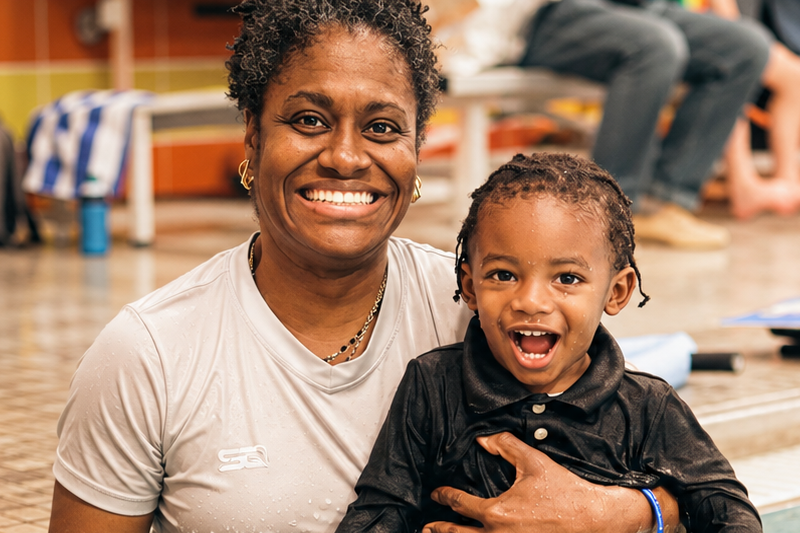
At some point during their child’s infant survival swimming course, many parents notice a long-sleeved shirt and a pair of pants in the swim bag and ask us why their little one is about to practice in clothes rather than a swimsuit. With fall wardrobes coming out of storage, it’s a good time to explain, since the reason has to do with how accidental falls into water tend to happen and has nothing to do with the season.
Infant Swimming Resource™ (ISR) lessons teach very young children to respond if they unexpectedly end up in water. A child who tumbles into a pool or pond without warning will usually be wearing whatever they happened to have on that day, which makes survival swimming practice in a swimsuit only part of the picture.
Why Does Infant Survival Swimming Include Clothing Practice?
A planned swim lesson means your child is dressed for the water, you’re standing nearby, and everyone knows what’s coming. An accidental fall happens in the middle of an ordinary day, in ordinary clothes, with no time to get ready. Clothing practice exists to bridge that gap between the two.
ISR’s parent resource book describes practice in both summer and winter clothing once students have developed their skills, so children get to experience how their floating and swimming feel with fabric on before they ever need those skills for real.
Infant swimming self-rescue skills are more useful when a child has already experienced them in realistic conditions.
How Is Being in the Water With Clothes Different?
Wet clothing changes how a child’s body feels in the water, and a skill that comes easily in a swimsuit can feel unfamiliar once fabric is involved. A few of the things children notice:
- Extra weight once the clothing is soaked
- Fabric that clings to the arms and legs
- A different feel when rolling onto the back to float
- Less freedom in the movements they already know
An instructor can introduce all of this gradually and watch how each child responds. A parent can’t recreate that at home, which is why ISR lessons in clothes belong in the pool with a certified instructor and nowhere else.
When Does Clothing Practice Fit Into ISR Lessons?
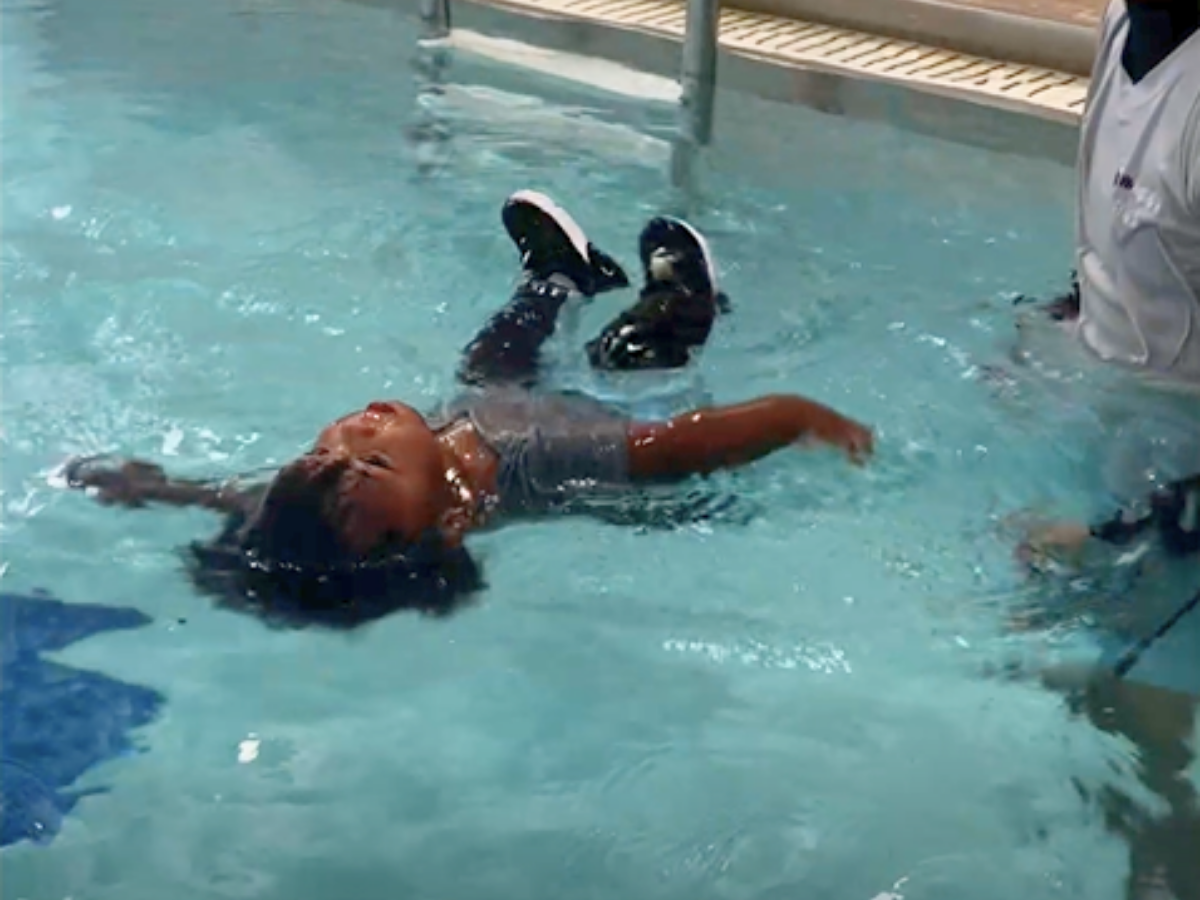
Clothing practice comes later in the process and is never part of a first lesson. The individualized approach behind ISR starts with building core skills, like rolling onto the back to float and the swim-float-swim sequence, and the parent resource book places clothing practice after those skills are in place, toward the end of the initial lesson series.
We also note that students aren’t considered complete until they can perform their age-appropriate survival skills fully clothed.
We won’t put a specific week number on it, because each child moves at their own pace and the instructor decides when a student is ready. Your instructor can tell you where your child stands and roughly when to expect it.
What Should Parents Ask Before a Clothing-Practice Lesson?
These are questions for your instructor, since the details can differ from child to child.
What Clothing Should We Bring?
Ask exactly what your instructor wants your child wearing for that lesson, and whether shoes or any other items are included. A fixed packing list from a blog post can’t account for where your child is in their lessons, so the instructor’s answer is the one to follow.
What Should We Expect During the Lesson?
Ask the instructor to explain the purpose of the session, what you’ll see from where you’re standing, and how it connects to the skills your child has already learned. A good answer will point back to specific progress your child has made.
What Should We Do Afterward?
Ask what feedback you’ll get, whether more clothing practice is needed, and how you can support the next stage at home. One session doesn’t automatically complete the program, so it helps to know what comes next.
Why This Is Not an At-Home Water-Safety Test
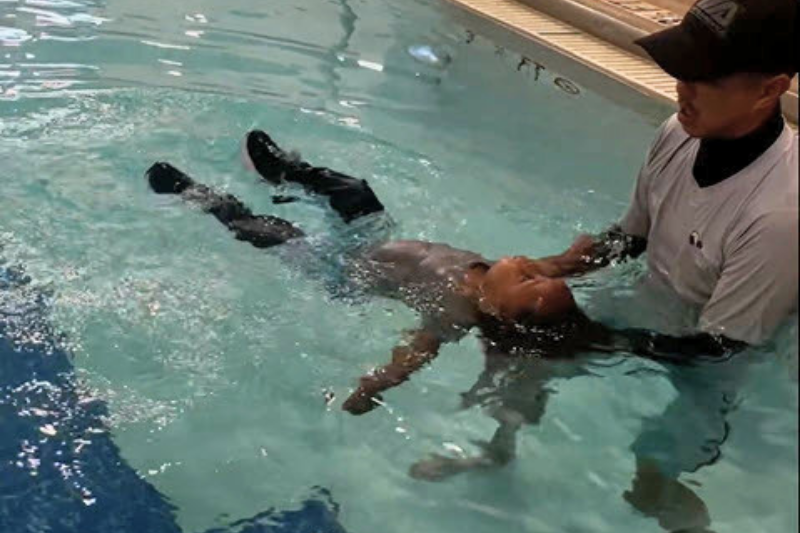
Once you’ve watched your child handle a clothed lesson well, you might feel tempted to check their skills yourself at home. Please don’t. Recreating an unexpected fall, testing submersion, or trying a clothed self-rescue outside of a lesson puts your child at real risk, and clothing practice was designed to happen with a certified instructor in the water. If you wonder how your child is doing, ask the instructor.
Lessons Are One Part of a Larger Water-Safety Plan
The American Academy of Pediatrics notes that swim lessons don’t make children drown-proof and also says good swim lessons should include realistic conditions, such as falling in and swimming in clothes, which is the same reasoning behind the practice described above.
Lessons work best alongside the other layers of protection:
- Close, constant supervision whenever your child is near water
- Barriers that keep children from reaching pools and ponds unsupervised
- Life jackets where they’re appropriate
- Parents and caregivers who know CPR
If you’re still deciding on a program, choosing an ISR instructor is an important part of the process. Our guide to the questions to ask before enrolling in infant survival swim lessons covers readiness, scheduling, and what to discuss with an instructor before lessons begin.
Explore ISR Lessons in Bethesda, McLean and Silver Spring
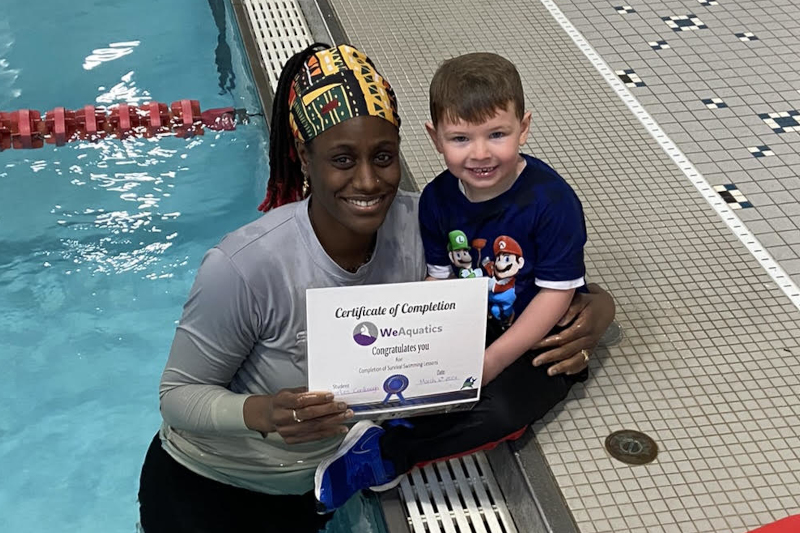
Have questions about what ISR lessons involve? We offer Infant Swimming Resource™ classes at Embassy Suites by Hilton in Bethesda, MD, Hilton McLean Tysons Corner in McLean, VA, and LA Fitness in Silver Spring, MD. You can see all of our WeAquatics pool locations to find the one that fits your routine, and learn more about ISR lessons at WeAquatics by asking our team about current availability.
