
How Short, Focused Lessons Help Families Prioritize Water Safety
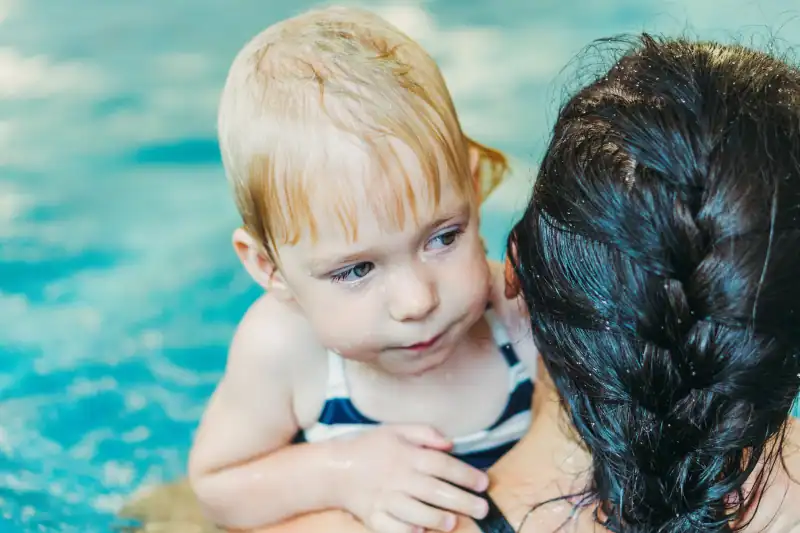
For families juggling work, daycare, naps, meals, errands, and everyday responsibilities, infant swim lessons for busy parents need to feel realistic, not overwhelming. It can be difficult to imagine fitting another commitment into an already full schedule, even when it supports something as important as water safety. Short, focused Infant Swimming Resource™ (ISR) lessons can help families build meaningful water skills into their week without requiring long periods away from their regular routines.
Designed for children ages 6 months to 4 years, ISR lessons are one-on-one and typically last about 10 minutes each day. Over the course of approximately 1–2 months, children work toward age-appropriate water survival skills through consistent, individualized instruction.
For busy families throughout Washington, DC, Maryland, and Virginia, this structure can make lessons easier to manage than expected. Instead of setting aside a large portion of the day, parents can build a short lesson into their regular routine while helping their child become safer and more confident in the water.
Why Short, Consistent Infant Swim Lessons Work
The idea of attending lessons several days a week may sound challenging at first. However, because each session is brief and focused, many families find the routine more manageable than a longer class that requires a larger time commitment.
Young children learn through repetition and consistency. Short lessons allow instructors to focus on specific skills while helping infants and toddlers avoid becoming overly tired or overwhelmed in the water.
Because lessons are one-on-one, every minute is centered on your child’s progress and needs. There is no waiting for turns or adjusting to a group pace. Your child receives direct instruction throughout the session, helping make each lesson purposeful and efficient.
For parents comparing infant swim lessons, this format offers a practical balance: consistent skill-building for children without requiring families to reorganize their entire week.
Finding a Lesson Time That Works for Your Routine
Choosing a lesson time is about more than finding an opening on the calendar. Babies and toddlers often do best when they are rested, comfortable, and not approaching a nap or feeding time.
A short lesson may fit naturally into your day:
- Before a morning nap
- After daycare pickup
- Between errands or appointments
- During a predictable window in your workday or caregiving routine
The goal is not to create a perfect schedule. It is to choose a lesson time that works well enough for your family to maintain consistently.
Parents searching online for infant swim lessons near me may want to consider location and travel time alongside the lesson schedule. A program may sound ideal, but it also needs to fit into real family life. Choosing a convenient location and realistic time of day can make the experience smoother for both you and your child.
What Children Learn in ISR Lessons
Parents are often more motivated to make room for lessons when they understand what their child is learning and why it matters.
ISR lessons focus on survival-based skills taught according to each child’s age and developmental readiness.
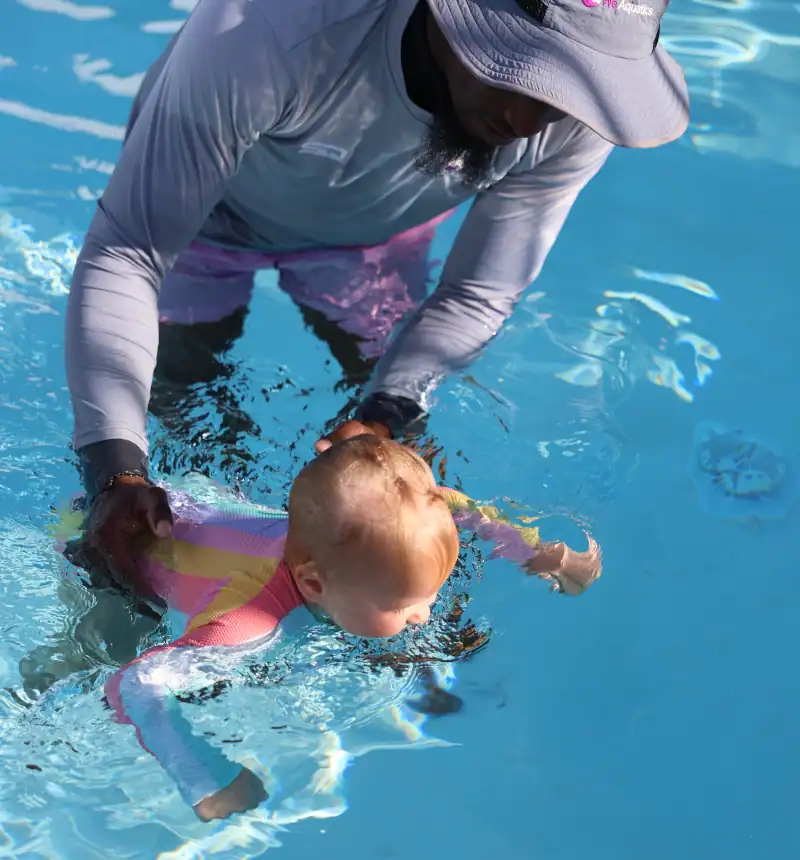
Children under 15 months work toward learning how to roll from a facedown position in the water into an unassisted float. This skill is designed to help a young child rest and breathe if they unexpectedly enter the water.
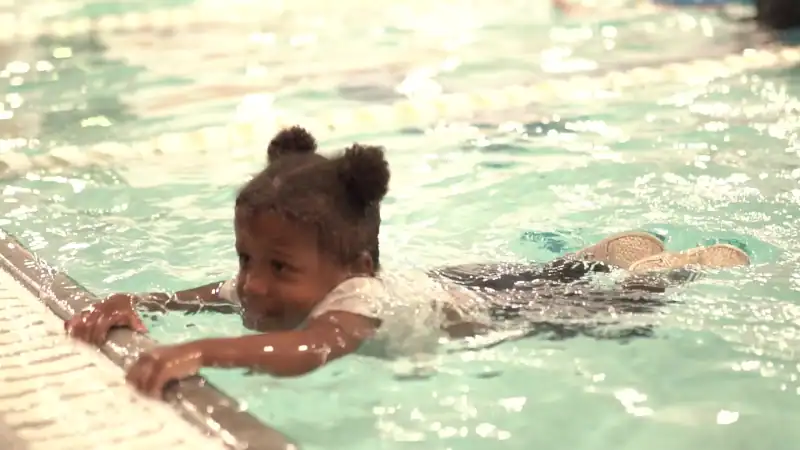
Children 15 months and older work toward a swim-float-swim sequence. They learn to swim facedown for a short distance, roll onto their backs to float and breathe, and then continue swimming when able.
These infant swimming lessons are not simply about introducing a child to the pool. They are designed to help young children practice practical, age-appropriate water survival skills through careful and individualized instruction.
Of course, swim lessons are only one part of water safety. Active adult supervision, pool barriers, life jackets when appropriate, and other safety layers remain essential. Survival-focused lessons can serve as an important addition to those protections.
Making Daily Lessons Easier to Manage
When family life is busy, a little preparation can make a daily routine feel far more manageable.
Consider keeping a small swim bag packed with essentials such as a towel, swim diaper, wipes, dry clothes, and anything your child may need after the lesson. Having everything ready can make it easier to leave the house without adding unnecessary stress to the day.
It can also help to treat lessons as part of a familiar daily rhythm. As the American Academy of Pediatrics explains in its resource on the importance of family routines, predictable routines can help families organize everyday responsibilities while supporting a child’s sense of stability. Choosing a consistent lesson time and preparing in advance can make swim lessons feel less like a disruption and more like a manageable part of the week.
Instead of wondering how to add a permanent new activity to your calendar, focus on building a dependable routine for the weeks ahead while your child works toward important water survival skills.
Why Infant Swim Lessons in the DMV Need to Be Practical
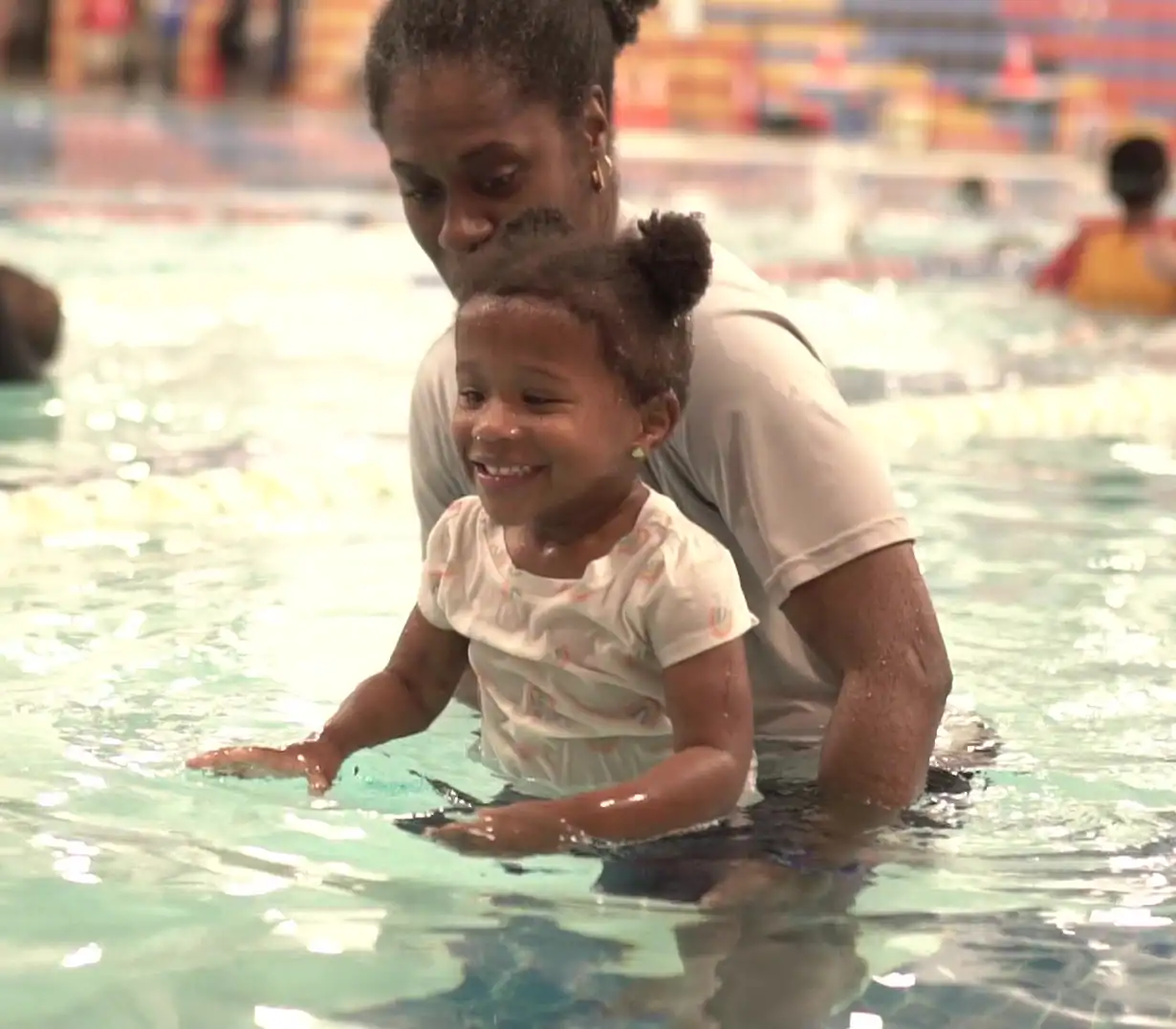
Life in the DMV often means navigating traffic, work schedules, childcare arrangements, school pickups, and full weekends. For families exploring infant swim lessons in the DMV, convenience is not simply a bonus. It can be one of the biggest factors in whether a program works for their household.
Families researching local options may also find resources such as Washington Parent’s guide to popular swim schools in the DC area helpful when comparing lesson formats, locations, and scheduling options.
Short session times and one-on-one instruction allow families to make meaningful progress without dedicating a large block of time to each lesson.
Parents do not need another activity that feels complicated or difficult to maintain. They need a program that respects their schedule while staying focused on their child’s safety and development.
A Meaningful Step Toward Water Safety
A full schedule should not prevent families from exploring important water survival skills for their children. With short, individualized lessons and a clear learning focus, infant swim lessons for busy parents can be a realistic option for families balancing the demands of everyday life.
WeAquatics offers one-on-one Infant Swimming Resource™ lessons for children ages 6 months to 4 years throughout Washington, DC, Maryland, and Virginia. Through brief, consistent instruction, children can work toward safer responses in the water while parents build lessons into a routine that fits their week.
Give Your Child Skills That Can Matter in an Emergency
Water safety cannot wait until your calendar slows down. Help your child begin building essential survival skills through short, focused ISR lessons designed to fit into real family life.
Take the next step toward safer water experiences today. Enroll in Infant Swimming Resource™ Lessons!
Common Questions About Infant Swimming Lessons
1. What are infant swim lessons designed to teach?
Infant swim lessons help young children build age-appropriate skills in the water through consistent, individualized instruction. For ISR students, skills may include learning to roll into an unassisted float or practicing a swim-float-swim sequence, depending on the child’s age and developmental readiness.
2. At what age can my child begin infant swimming lessons?
Infant swimming lessons are available for children ages 6 months to 4 years. Lessons are tailored to each child’s age, comfort level, and developmental stage, helping them work toward important water survival skills through one-on-one instruction.
3. How long do infant swim lessons take each day?
ISR infant swim lessons typically last about 10 minutes per session and take place several days each week. The short lesson format is designed for young children and can make it easier for busy parents to build water safety instruction into their family routine.
4. Can infant swim lessons fit into a busy family schedule?
Yes. Infant swim lessons can be manageable for busy families because sessions are brief, structured, and focused on one child at a time. Many parents choose a lesson time that works around naps, daycare pickup, work schedules, or other regular parts of the day.
5. Where can families find infant swim lessons in the DMV?
Families looking for infant swim lessons in the DMV can find options throughout Washington, DC, Maryland, and Virginia. When comparing programs, consider the location, daily travel time, lesson format, and whether the schedule realistically fits your child’s routine.
6. Are infant swimming lessons enough to keep a child safe around water?
No. Infant swimming lessons can be an important layer of water safety, but they do not replace active adult supervision, secure pool barriers, proper life jackets when appropriate, or other safety precautions. Lessons can help children practice safer responses in the water while families continue using multiple layers of protection.
