
Inside Kapable’s First Discover & Demo Adaptive Aquatics Session
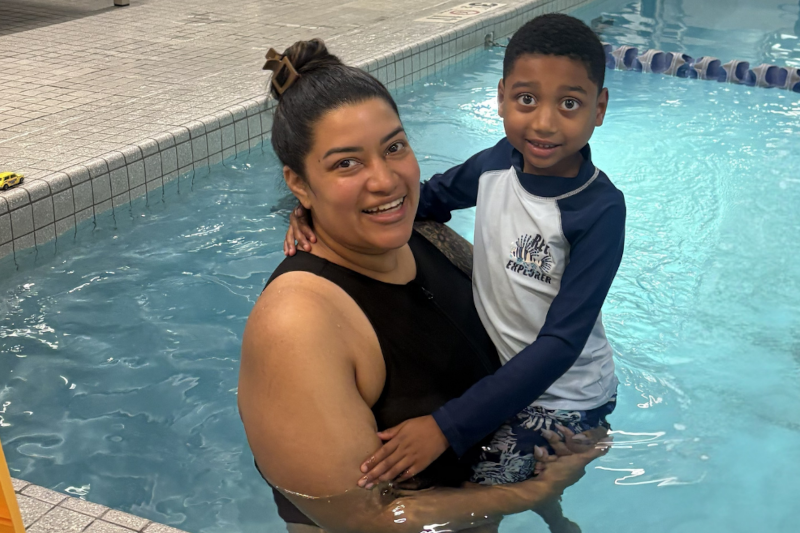
Water can be one of the most joyful places for a child to grow in confidence, or one of the most dangerous, depending on the support they have around it. For families raising children with intellectual and developmental disabilities, that gap in support is exactly what Kapable set out to close with the help of adaptive swimming, and it’s what brought WeAquatics into the pool with them this summer.
On Friday, July 24, Kapable brought its Discover & Demo program to the pool for the first time, inviting WeAquatics to help lead the session at Balance Gym’s Foggy Bottom location (Fairmont Georgetown). Seven children and their parents came out for a hands-on introduction to adaptive swimming instruction. Kapable is a DC-based organization dedicated to connecting families with the resources their children need, and the event was also supported by its sister organization, NoMo Worries.
Why This Partnership Started
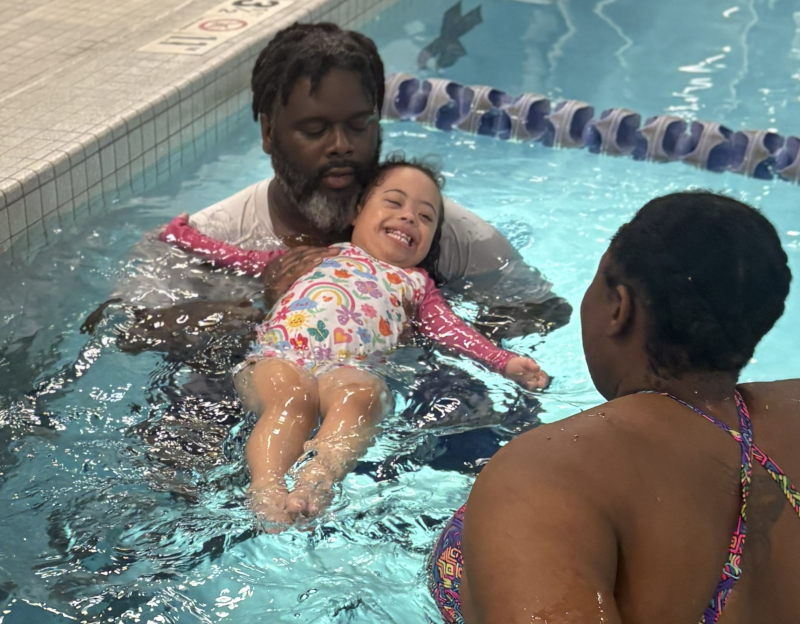
This partnership started with a real gap Kapable was seeing in the community. Executive Director Cheyenne Glenn came across a statistic that she hasn’t been able to shake since: children with autism are 160 times more likely to die from drowning than other kids, largely due to elopement, when a child wanders toward water without recognizing the danger, according to a 2017 Columbia University Mailman School of Public Health study. Autism is simply the most widely tracked disability for this risk. Kapable sees the same elevated drowning risk across all the families it serves, not just those on the spectrum.
The bigger picture backs that up. Drowning is already the second leading cause of injury-related death for children under 14, and for every child who dies from drowning, another five end up in the emergency room for submersion injuries. For children with a dual diagnosis of Down syndrome and autism specifically, that risk is more than double what it is for a typically developing child, according to Children’s Hospital of Philadelphia. It’s also worth remembering that drowning isn’t limited to pools. It can happen in a lake, a bathtub, even a bucket, and it can happen in under two minutes, often without a sound. The same CHOP resource has five practical tips for keeping kids with special needs safer in and around water, worth a read for any family in this community.
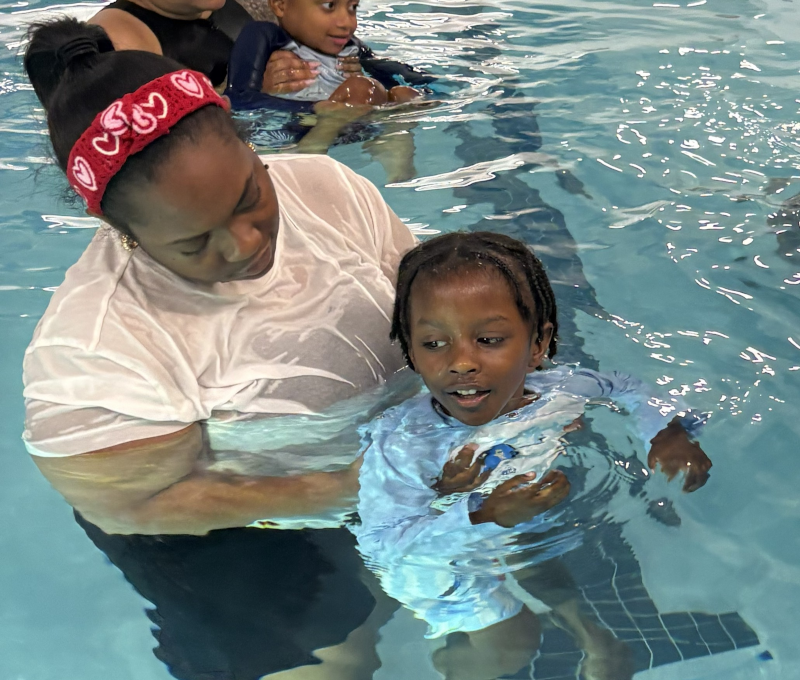
Kapable had already started chipping away at this earlier in the summer, running a couple of Swim Safety Down Syndrome & Friends playgroups and passing along safety tips from local adaptive swim instructors and Swim Angelfish’s YouTube channel. But talking to families, Cheyenne kept hearing the same thing: parents had been looking for years for real swimming lessons for their autistic child, or for a special learner with Down syndrome or another developmental disability, and kept ending up in generic group classes that weren’t built with their kids in mind. So when she found out WeAquatics had an actual adaptive swimming program, she reached out.
“Kapable is dedicated to making resources accessible for DC’s Intellectually and Developmentally Disabled Community,” Cheyenne says. “Often we see that access to information and programs can really make the difference in the quality of life of an individual. It can determine knowledge, development, even employability.” That mission is reflected in Kapable’s motto: With the right support, everyone is Kapable.
Reflecting on the event itself, she adds: “This program was really a dream. WeAquatics was so incredibly receptive to our thoughts on structure the whole way through, and were truly invested in the ongoing safety of all the participants. It really allowed our families to have a safe and patient space to develop these skills. No one needed to apologize for their child’s behavior or how that child expressed themselves. It was beautiful to just see our kids being them and being accepted. I feel like we often forget that when we do classes like this. Half of the battle is feeling accepted enough to be vulnerable and try. Even my own little one had the time of her life splashing around and learning to trust herself in the water. We’re definitely interested in doing more of this.”
Inside an Adaptive Swimming Session
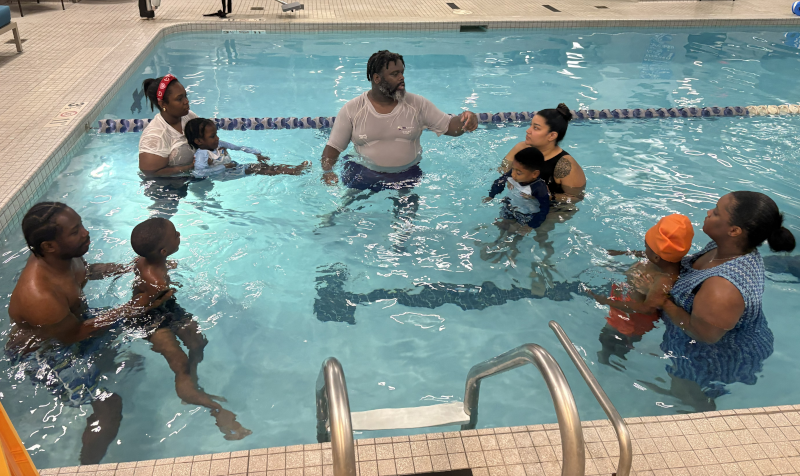
The July 24 event was split into two one-hour sessions, giving each family focused time in the water. Participants ranged from roughly 2 to 8 years old and reflected the full range of individuals Kapable serves, including children with autism, Down syndrome, and other intellectual and developmental disabilities, along with a participant who is deaf.
Rather than a standard lesson format, WeAquatics built the day around an adaptive aquatics skill menu designed around comfort and safety first:
- A 15-minute pool-familiarization period to let each child settle in at their own pace
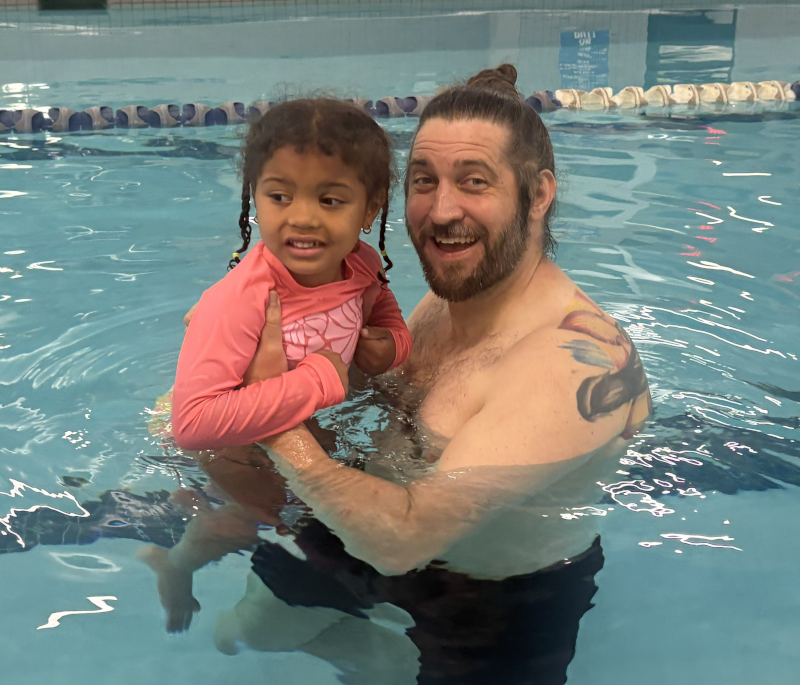
- A 1:1 parent-in-the-water model, so every child had a trusted adult right beside them
- Sensory-friendly pacing throughout, adjusted to each child’s individual needs
- A focus on back float and kicking as foundational water-safety skills
Medical clearances for participants were coordinated on Kapable’s side ahead of the event. It’s this kind of structure, built specifically for adaptive swimming rather than adapted on the fly, that makes the biggest difference for families who have struggled to find the right fit elsewhere.
Meet Derrick Linzy: The Instructor Behind the Sessions
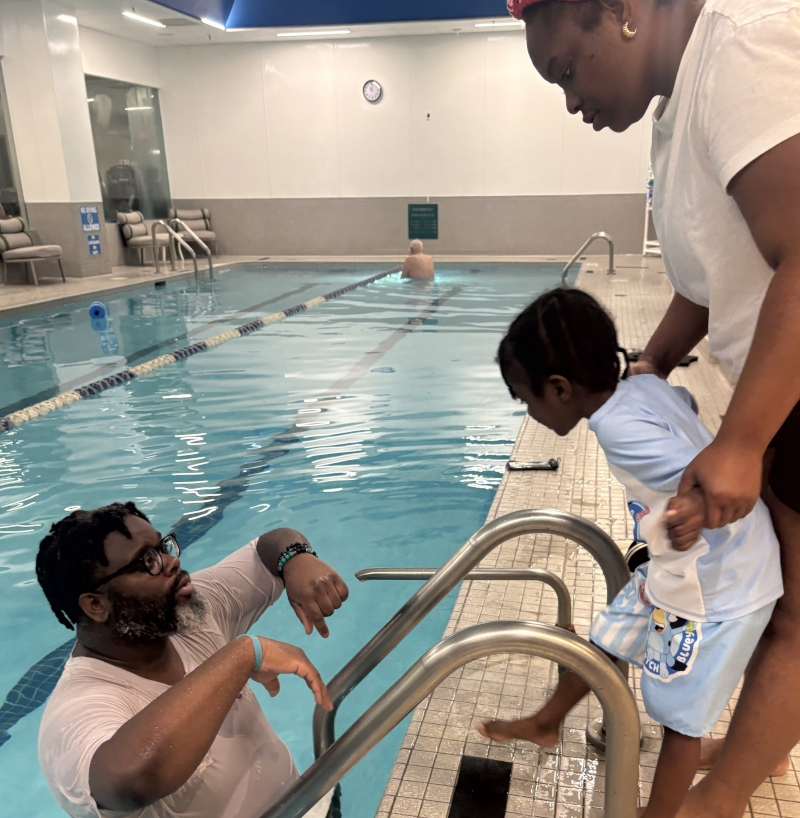
The sessions were led by Derrick Linzy, one of WeAquatics’ senior Learn-to-Swim instructors and a Level 1 Swim Angelfish certified adaptive aquatics instructor. Derrick pursued Swim Angelfish certification specifically to specialize in adaptive swimming, gaining the training and tools to give students the individualized care the format requires.
“The whole experience was meaningful,” Derrick says. “It’s a great experience to see a parent with their child, that bonding and learning experience together. The parent gets to see their child do things they may not have thought their child would be able to or comfortable doing, and gets to see just how capable their child really is.”
A Moment Worth Sharing
An 8-year-old boy came in with his mom, who wasn’t sure he’d even get in the water. He’d balked before. She figured this would be another one of those days.
Derrick didn’t try to fix that in one lesson. “The point isn’t to get a perfect score, it’s to get a high score,” he says. “We’re just looking for a little bit of progress, even if it’s one percent.”
He got in the pool with the boy’s mom next to him and started small. A few minutes of just floating on his back, her hand under his shoulders. Some kicking. Nothing dramatic. But by the end of the session the boy was doing both on his own, and his mom was standing there watching him do it. Derrick still brings up her face in that moment when he talks about the event. That’s the part that stuck with him, more than anything else from the day.
What Families Are Saying
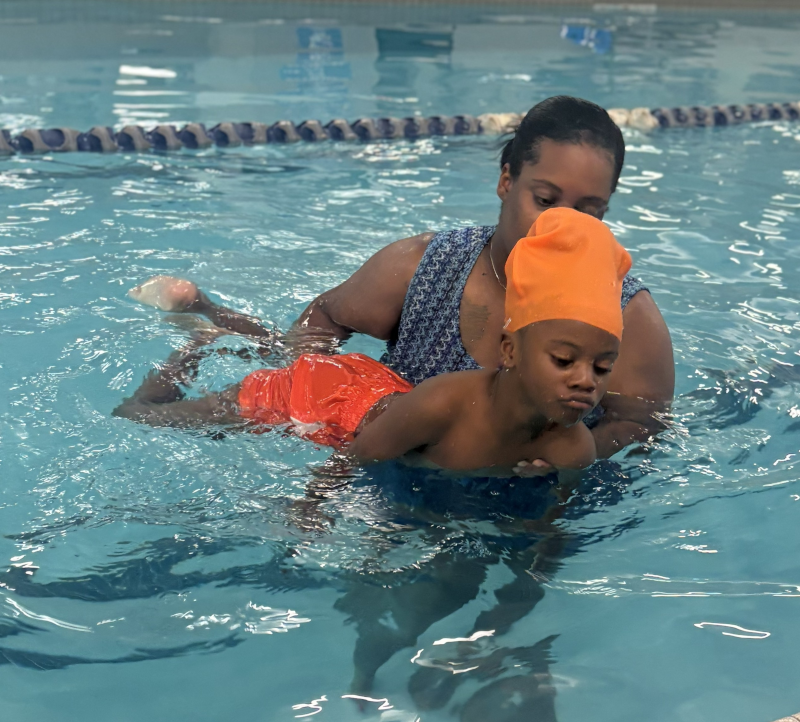
Kapable has been collecting feedback from families since the event, and a few parents have shared their experience with signed consent to use it here.
“The instructor was very supportive, and helped answer any questions or concerns I had. That made me feel a lot more comfortable being in the water with my son, watching him work through different tasks,” says Rockeya Johnson, a Kapable parent.
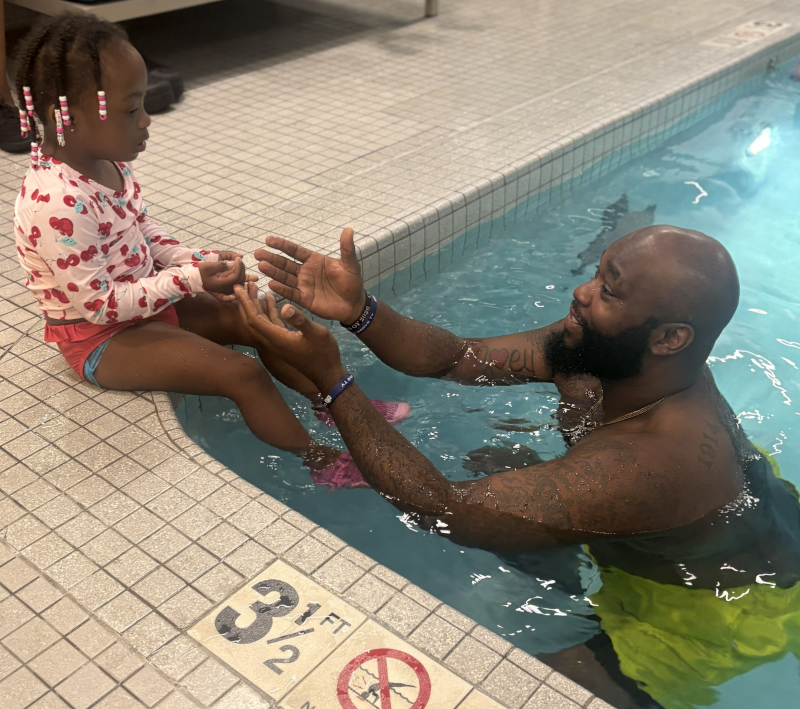
Another parent, Daniel Dennis, put it simply: “Knowledgeable instructors, great advice.” Asked whether he’d want to see the program continue, he didn’t hesitate: “For safety and because water is fun. All kids should have the opportunity to learn how to handle themselves in water.”
Kisha Philson, whose daughter Kenzi also took part, echoed the same experience: “We had a wonderful experience at the adaptive swim class. The instructor was incredibly interactive, patient, and encouraging throughout the lesson. He took the time to engage with Kenzi at her own pace, which made us feel comfortable and confident in the water. Kenzi had such a great time that both her dad and I left talking about signing her up for another class.”
What’s Next
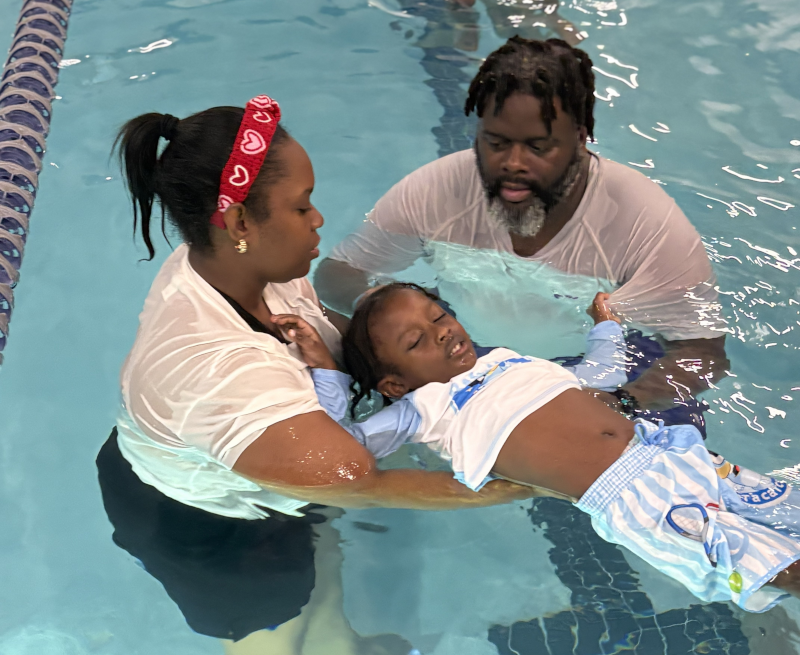
This summer’s program is intentionally a two-session pilot, with the first event on July 24 and a second planned for August 14. WeAquatics is exploring what an ongoing adaptive swimming offering built around this adaptive aquatics model could look like, but nothing is confirmed yet, so consider this the first chapter rather than a finished program.
As WeAquatics founder David Worrell put it: “The event was a real eye-opener into a format we’ve never tried before. It was refreshing to see the students and parents enjoy it, and parents told us they felt comfortable enough to keep practicing the skills we worked on during their own family time at the pool. That’s a huge win in my book.”
That’s really the measure of success here: not a perfect first session, but families who left the pool with new tools, new confidence, and the sense that a place like this could work for their child too.
Ready to Get Started with Adaptive Swimming?
WeAquatics offers ongoing 1-on-1 adaptive swimming lessons with Swim Angelfish certified instructors at locations across DC, Maryland, and Virginia, for swimmers ages 4 through adult. Whether you’re looking for swimming lessons for an autistic child or another adaptive aquatics need, sign up for an intake assessment today and get your swimmer matched with the right instructor and lesson plan.
Privacy & Photo Notice: All photos and parent testimonials featured in this article are published with permission from participating families for promotional and educational purposes. We thank Kapable, Kioma, and NoMo Worries for their collaboration and support of this event.

