Adaptive Swim Lessons Meet Students Where They Are
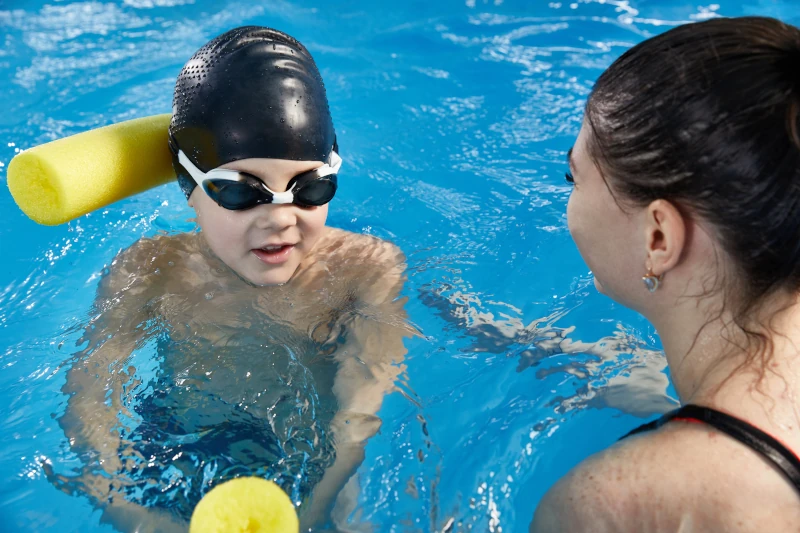
Not everyone learns to swim the same way. Some kids are able to pick up swimming freestyle after several lessons, while others need more time to feel comfortable putting their face in the water. And some swim students— those with autism, ADHD, sensory processing differences, or nonverbal communication styles— need an entirely different approach.
That’s where adaptive swim lessons come in.
For the past three years, WeAquatics has been working with Swim Angelfish®, an organization that provides specialized training and certification for instructors teaching students with different learning styles.
And it’s changed how we think about swimming instruction. Not just for adaptive learners, but for every student who comes through WeAquatics.
Why Adaptive Swim Lessons Are Important
The statistics around water safety and children with developmental differences are sobering. Children with autism are 160 times more likely to die from drowning than their neurotypical peers. Many kids on the autism spectrum are naturally drawn to water, which increases the risk even more.
What can make this even more complicated is that many families don’t disclose that their child has special needs when signing up for Learn-to-Swim lessons. Sometimes this happens because they are worried about being turned away or they don’t find the information relevant. In other cases, it stems from past negative experiences.
Without that context, lessons may begin without a full understanding of how a child learns best.
What Swim Angelfish® Training Provides
Swim Angelfish® is a certification program that trains swim instructors to work with students who have nontraditional learning styles. Think of it as a specialized layer on top of standard swim instructor training.
The program focuses on things like:
- Reading and responding to nonverbal cues
- Using alternative communication methods (like visual cards students can point to)
- Manipulating the pool environment to reach students who don’t respond to verbal instruction
- Identifying learning differences that families may not have disclosed or think are relevant.
This specialized training doesn’t just help instructors work with adaptive learners; it changes how we teach everyone.
“It’s definitely a confidence booster,” David Worrell says. “This training has helped in other areas that are not to do with adaptive learners, just as much as adaptive learners. Your outlook on teaching swimming is evolved and more mature.”
How WeAquatics Instructors Learn to Teach Every Student
WeAquatics doesn’t automatically enroll every instructor in Swim Angelfish® training. The certification is an investment in time, money, and the instructor’s commitment to working with adaptive learners.
So we wait, observe the way instructors teach, and look for signs that someone has the right combination of skills: consistency, patience, understanding of swimming fundamentals, and genuine interest in working with students who need a different approach.
Most instructors who become certified have been with WeAquatics for at least one to two years. They’ve already proven they can deliver solid lessons, and the Swim Angelfish® training provides them with additional tools.
Right now, WeAquatics has nine instructors certified at Level 1, three at Level 2, and one working toward Level 3. These instructors are spread across locations in DC, Virginia, and Maryland.
And the training is already changing how swim lessons work.
Meeting Adaptive Swim Students Where They Are
One of the most practical tools that came out of the Swim Angelfish® partnership? Communication cards.
They’re simple visual cards that nonverbal students can point to during lessons. Things like “I’m cold,” “I need a break,” “I’m ready to try again.”
WeAquatics now has these cards available at every location, not just for students who’ve formally disclosed special needs, but for any student who might benefit from an alternative way to communicate with their instructor.
That’s the philosophy shift that Swim Angelfish® has brought to WeAquatics: assume that different learning styles exist in our pools, and be prepared to accommodate them.
This shows up in other ways too:
On the website: Families can check a box indicating their child benefits from adaptive instruction, without having to disclose specific diagnoses.
In customer service: The admin team has guidance on how to ask clarifying questions respectfully and note adaptive learning preferences in student profiles while staying HIPAA-compliant.
In expectations: When instructors know upfront that a student has a nontraditional learning style, we can have realistic conversations with families about what progress will look like. That reduces frustration on all sides.
“If we can manage expectations, everybody is served,” David explained. “If instructors are not aware of a specific learning style and they’re simply teaching based on what our regular curriculum is, it can be frustrating for them too. The way they’re teaching may not be working, it’s not effective, so skills are not being mastered.”
Why David’s ISR Background Prepared Him for Adaptive Swim Lessons
Before David ever heard of Swim Angelfish®, he’d been working with adaptive learners for years; he just didn’t label them that way.
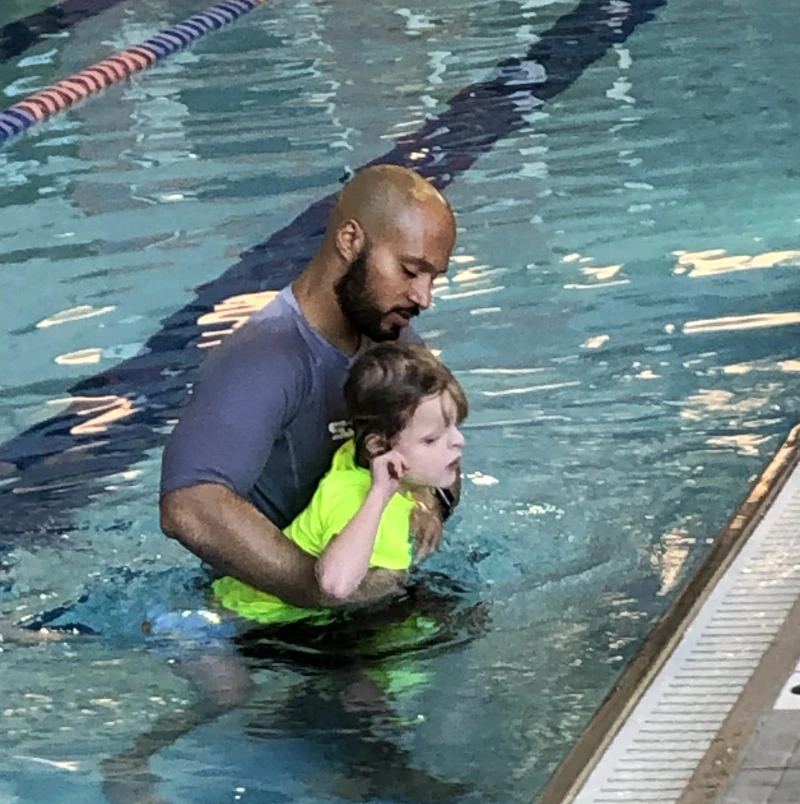
His background as an ISR (Infant Swimming Resource™) instructor shaped his entire approach to teaching swimming. ISR focuses on survival skills for babies and toddlers, often before they can speak.
“My training as an ISR instructor was based on nonverbal communication,” David said. “It allowed me to take on a student who had a nontraditional learning style, regardless of their age.”
That experience taught him something crucial: there’s no one “right” way for a student to move through water. You work with what they bring.
“When you work with an adaptive learner, you’re not looking for coordinated movements as much as—where is the head positioning? How is that person pushing the water? What do I need to do to change the way that person pushes the water?” David explained.
That philosophy—meeting the student where they are—is now baked into how WeAquatics trains all of its instructors, whether or not they’re working toward Swim Angelfish® certification.
What This Means for Your Family
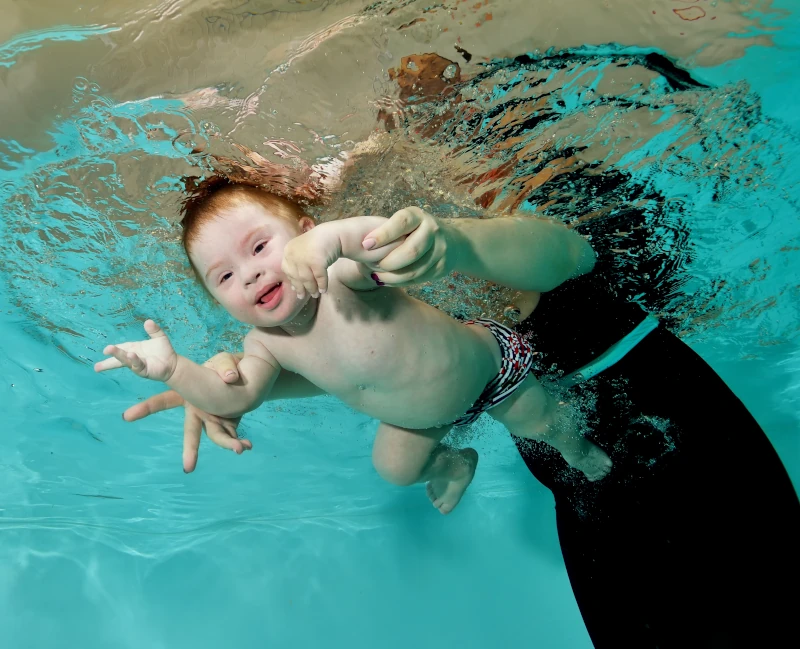
If you’re reading this and thinking, “My child struggles in traditional swim lessons, but I never thought of them as needing adaptive instruction”—that’s exactly the point.
Adaptive swim lessons aren’t just for kids with formal diagnoses. They’re for any student who needs a different approach:
- Kids and adults who are anxious in water
- Students who process instructions differently
- Children who communicate better through visuals than verbal directions
- Swimmers who need more time to feel comfortable before progressing
The Swim Angelfish® training has helped WeAquatics instructors recognize these needs earlier and adjust their teaching accordingly. Sometimes that means using communication cards. Sometimes it means breaking skills down into smaller steps. Sometimes it just means understanding that “mastery” looks different for different students.
The goal is simple: make swimming accessible to every student who wants to learn, regardless of how they learn best.
Ready to explore adaptive swim lessons for your child? Contact WeAquatics today to discuss your child’s specific needs and how our Swim Angelfish-certified instructors can help.