
Why Strong Fundamentals Matter in Intermediate Swim Lessons
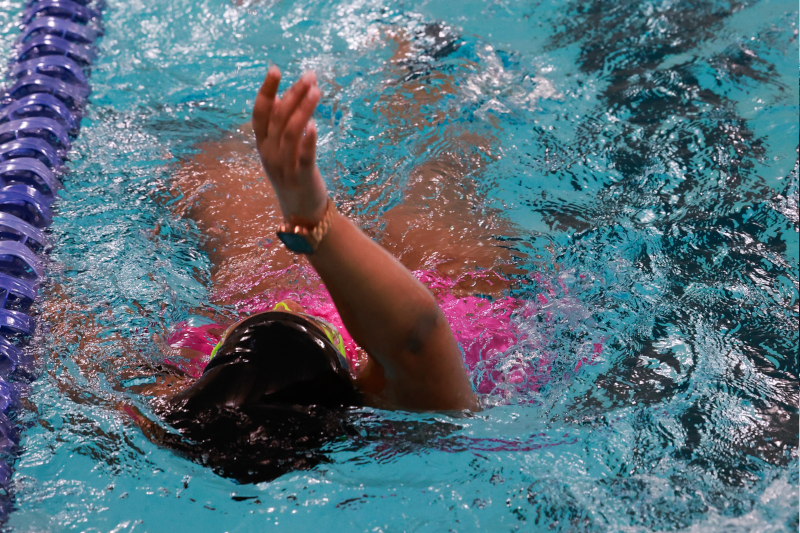
If your child has graduated past the basics and can swim a full lap without stopping, it’s tempting to shift the focus to one thing: going faster. It’s a natural instinct, especially when you’re watching other kids at the pool zip from wall to wall. But here’s what experienced coaches at WeAquatics have seen time and again: swimmers who chase speed before they’re ready tend to plateau early, develop sloppy habits, and sometimes lose confidence in the water altogether.
The truth is, speed isn’t something you teach. It’s something that shows up after the real work is done. If your child is enrolled in an intermediate swim lesson or just moving into that stage of their swimming journey, this post is for you. Before your young swimmer starts racing the clock, there are four foundational areas every intermediate swimmer needs to lock in first.
Why Speed Should Wait
Think of swimming like building a house. You wouldn’t start on the roof before pouring the foundation. Speed is the roof. Stroke mechanics, kick technique, turns, and endurance are your concrete and framing.
Intermediate swimming lessons are the ideal time to focus on these fundamentals because swimmers at this stage are no longer just trying to survive in the water. They’re ready to learn with intention. They can receive coaching, repeat drills, and start connecting the dots between effort and technique. Rushing past this window to focus purely on speed is one of the most common mistakes families make, and it’s one that’s hard to undo later.
Stroke Mechanics: The Foundation of Every Swim Lesson
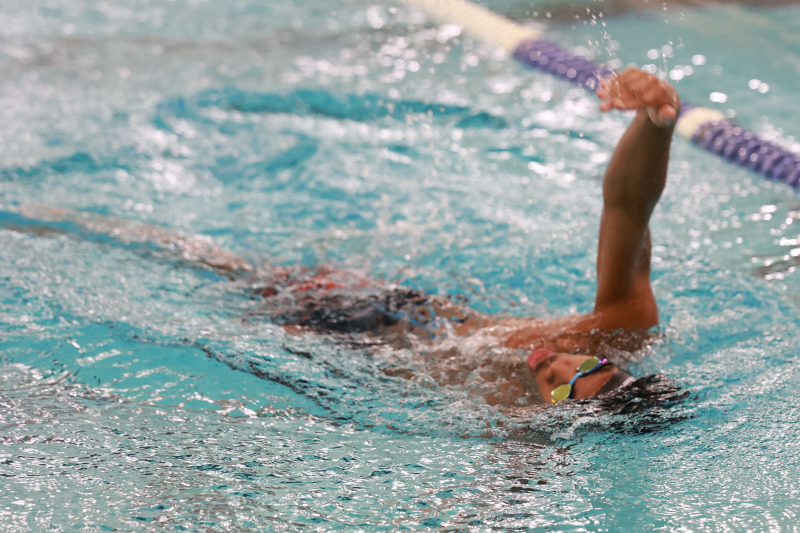
Before any conversation about speed, a swimmer needs to move through the water efficiently. Stroke mechanics are the single biggest determining factor in how fast a swimmer can eventually go, and they’re also the area most intermediate swimmers still need significant work on. In fact, research shows that swimmers can improve their performance by up to 30% when they master proper technique before focusing on raw speed.
For kids in swimming lessons for intermediate levels, coaches typically focus on a few key areas: body position and rotation, proper arm entry and catch, a clean pull-through, and consistent breathing rhythm. When any one of these skills breaks down, the swimmer creates more drag and wastes energy. A swimmer with beautiful mechanics will almost always outlast and eventually outpace a swimmer who’s just thrashing harder.
During freestyle and backstroke, watch for whether your child’s head position stays neutral and their hips stay near the surface. During butterfly and breaststroke, timing between the pull and kick becomes critical. If you’re watching your child’s practice and something looks effortful but not effective, mechanics are usually where to start.
Kick Development: More Than Just Moving Your Legs
Here’s a misconception worth clearing up: kicking is not just a supporting act. For intermediate swimmers, developing a strong, efficient kick is one of the highest-leverage things they can work on, and it’s also one of the most commonly neglected.
A productive freestyle kick is ankle-driven, relatively compact, and originates from the hip. Many intermediate swimmers default to a “bicycle kick,” bending at the knee and pushing down rather than generating propulsion from hip rotation and ankle flexibility. That type of kick creates drag rather than reducing it, which works directly against speed later on.
Kick drills using a kickboard are a staple in intermediate swim lessons for this reason. They isolate the lower body so swimmers can develop the ankle flexibility and hip engagement that will eventually power their full stroke. Breaststroke kick is its own discipline entirely and deserves dedicated attention. The timing, the whip motion, and the glide phase all need to be trained separately before they can be layered into a full stroke effectively.
Turns: The Hidden Speed Multiplier in Intermediate Swimming Lessons
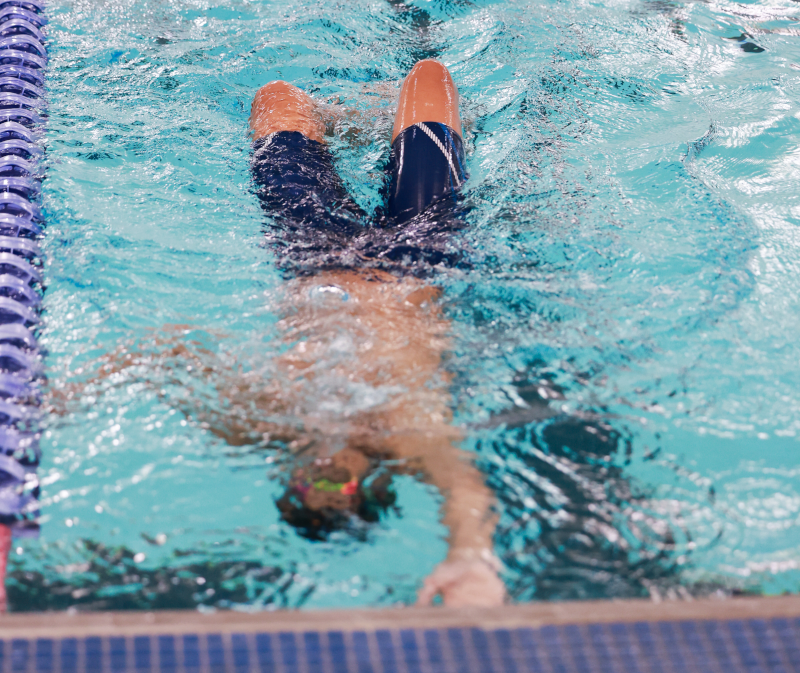
If there’s one skill that separates intermediate swimmers who plateau from those who keep improving, it’s the turn. Flip turns and open turns are often treated as an afterthought in early swimming development, but at the intermediate stage, they deserve to be front and center.
Here’s why: in a 25-yard pool, a swimmer completes a turn every single lap. That means in a 200-yard race, there are seven turns. According to the United States Masters Swimming, a well-executed flip turn conserves energy and can shave significant time off a race without any change in stroke speed at all. That’s not a small thing.
For swimmers working through intermediate swimming lessons in the Metro DC area, where competitive swimming culture is strong and club teams are popular, learning turns early creates a significant advantage. Coaches at WeAquatics prioritize turns as a core part of intermediate development for exactly this reason. The mechanics are teachable, the improvement is measurable, and the payoff is immediate once the technique clicks.
Endurance Work: Building the Engine
Speed needs endurance behind it. Intermediate swimmers build that engine through endurance training. It helps their technique, pacing, and confidence stay strong, even when they get tired.
At this level, endurance work is not about grinding through endless laps. It is about building an aerobic base. It teaches swimmers how to pace their effort and keep good mechanics under fatigue. That matters more than many people realize. A swimmer can look strong in the first 25 yards and fall apart in the last 25. Endurance training helps close that gap.
For swim technique for kids to transfer to races or real-world performance, it has to hold up under stress. Intermediate swimming lessons that include structured endurance sets help build that ability. These sets use moderate distances at a steady, controlled effort. Over time, they develop the engine that speed depends on.
Parents sometimes worry that endurance work will feel like a grind. But when coaches introduce it well, intermediate swimmers often enjoy the challenge. Finishing a longer set gives them a real sense of accomplishment. It builds mental toughness along with physical conditioning.
The Right Foundation Changes Everything
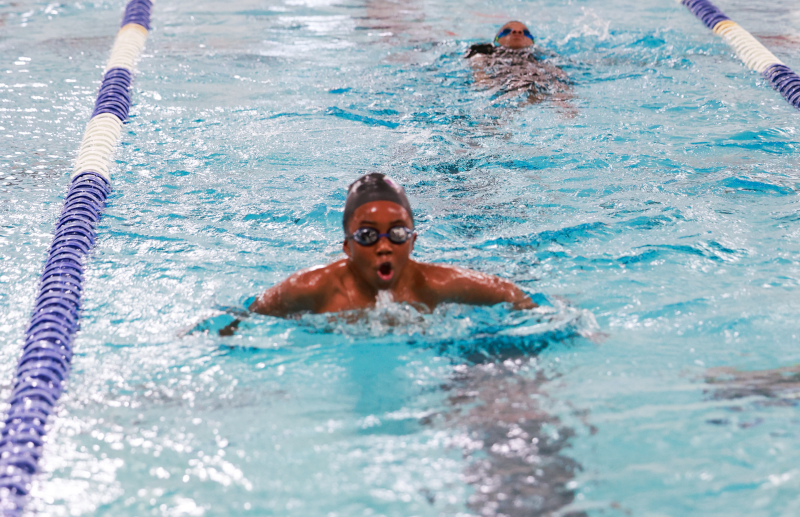
Swimmers earn speed by building the right foundation. Stroke mechanics, kick development, turns, and endurance work do not get in the way of speed. They create it. When swimmers develop these skills with intention, speed becomes a natural result instead of a frustrating goal that always feels out of reach.
At WeAquatics, our coaches work with intermediate swimmers across the greater Metro DC area to build exactly this kind of foundation. If your child is still working on core skills, our Learn-to-Swim program is the perfect place to start. If your swimmer is ready to build real endurance, master advanced technique, or dive into competitive swimming, the Narwhals Swim Team was built for exactly that.
Not sure which program is the right fit? Explore your options at WeAquatics and take the first step toward helping your swimmer reach their full potential.
